



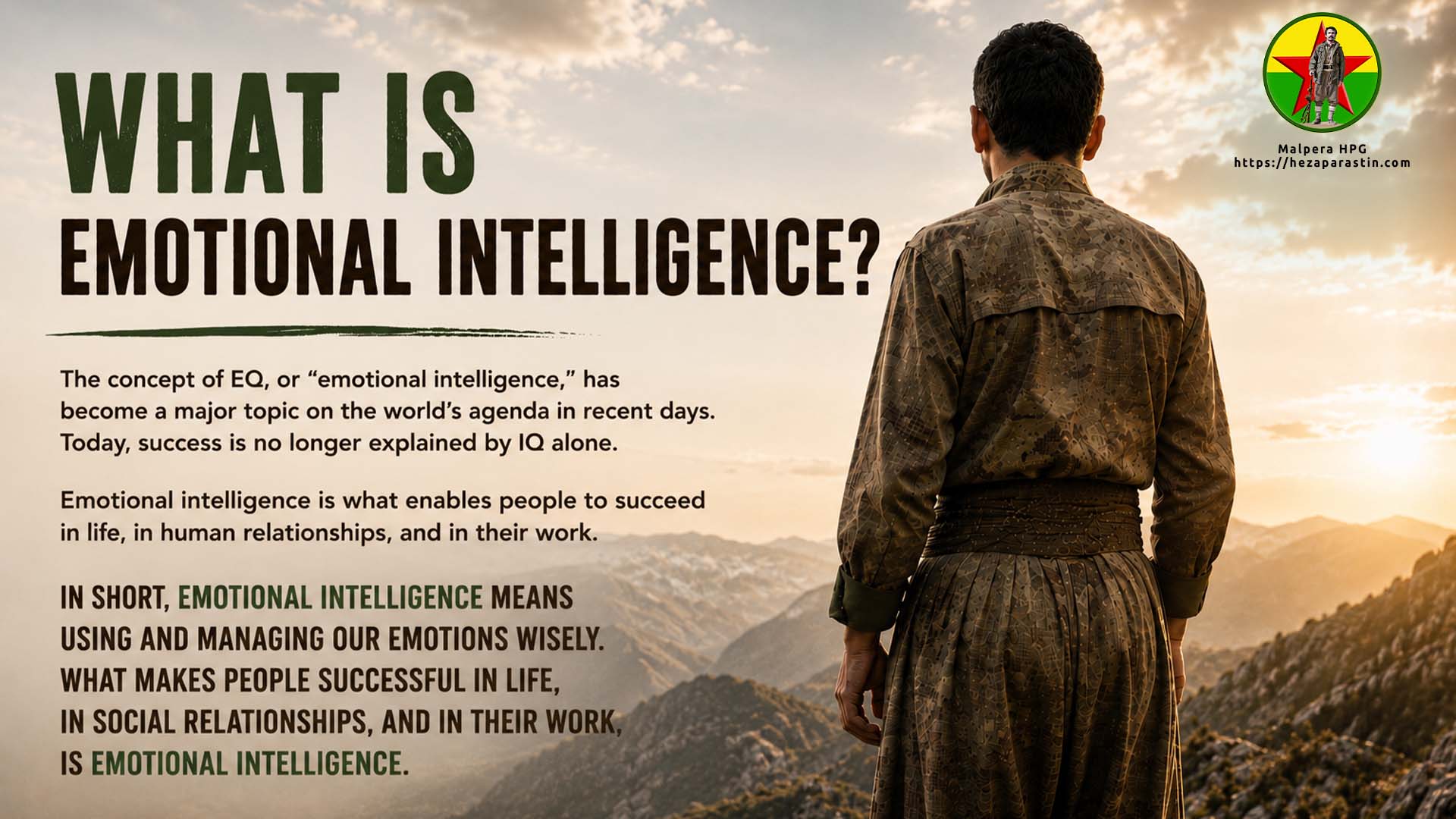
EQ, meaning “emotional intelligence,” has entered the world’s agenda a great deal in recent days.
School success and similar achievements are no longer explained only through IQ, that is, intellectual intelligence. Success in life, human relations, and professional work is also explained through EQ, meaning emotional intelligence. This is because many people who are successful at school are not successful in human relations or in working life.
In daily life, we often encounter people whose faces turn red with anger, who speak loudly, shout, and behave in similar ways. This is the result of the emotions that a person experiences within themselves. If the emotions a person experiences are not expressed at the right time and in the right way, they may put that person in a difficult situation. For this reason, emotions must be controlled and used in a rational way. This definition also applies to “emotional intelligence.” In short, “emotional intelligence” is a person’s ability to recognize and control their own emotions. Many experts also regard this as an art.
The term “emotional intelligence” was first used in 1990 by psychologist Peter Salovey of Harvard University and John Mayer of the University of New Hampshire. However, the term entered the world’s agenda more widely after Daniel Goleman’s book Emotional Intelligence, published in 1995.
Emotional intelligence is a concept that shows how much a person can control their emotions and turn them into something productive. People with a high level of emotional intelligence can use the power of their emotions as they wish. These people are successful in their social lives and in their professional work. Being aware of one’s own emotions and of the emotions of the people one is dealing with brings with it the potential to solve daily and professional problems.
People often make their decisions in emotional moments. A decision made in an emotional atmosphere usually remains under the influence of emotions. Emotional people, meaning those who remain under the influence of their emotions, cannot control their emotions and are directed by them. When such people make decisions, they do not think about what the result will be. Wherever their emotions direct them, they act accordingly. However, people with a high level of emotional intelligence, although they are emotional people, can manage their emotions, know their emotions well, and even though they give them great importance, they do not fall under the control of emotions.
The characteristics of people with a high EQ level are as follows:
** They know their own emotions well and can manage them.
** They can understand the emotions of the people before them well.
** They look at life from positive angles.
** Their human and social relations are very strong.
Emotional intelligence enables a person to be successful in daily, social, and working life. Emotional intelligence and intellectual intelligence are not opposed to each other. Both influence one another. However, emotional intelligence and intellectual intelligence are not the same thing.
According to some studies, intellectual intelligence is genetic and does not develop much after the age of six; it remains largely in place. Emotional intelligence, however, is not genetic; it develops through learning. Therefore, people who want to learn emotional intelligence can succeed through long-term effort.
Can a person not reach a high level in both intellectual intelligence and emotional intelligence and become successful?
Yes, we see the unity of emotional intelligence and intellectual intelligence in the personalities of leaders. In this regard, one can point to the leader of the Kurdish people, Mr. Abdullah Öcalan. Mr. Öcalan has reached the highest level both in intellectual intelligence and in emotional intelligence. Part of Mr. Öcalan’s success takes its source from this reality. Mr. Öcalan is the greatest personality of the century, both in terms of personality and thought.
In short, emotional intelligence means using and managing emotions rationally. What brings a person success in life, in social relations, and in work is emotional intelligence.