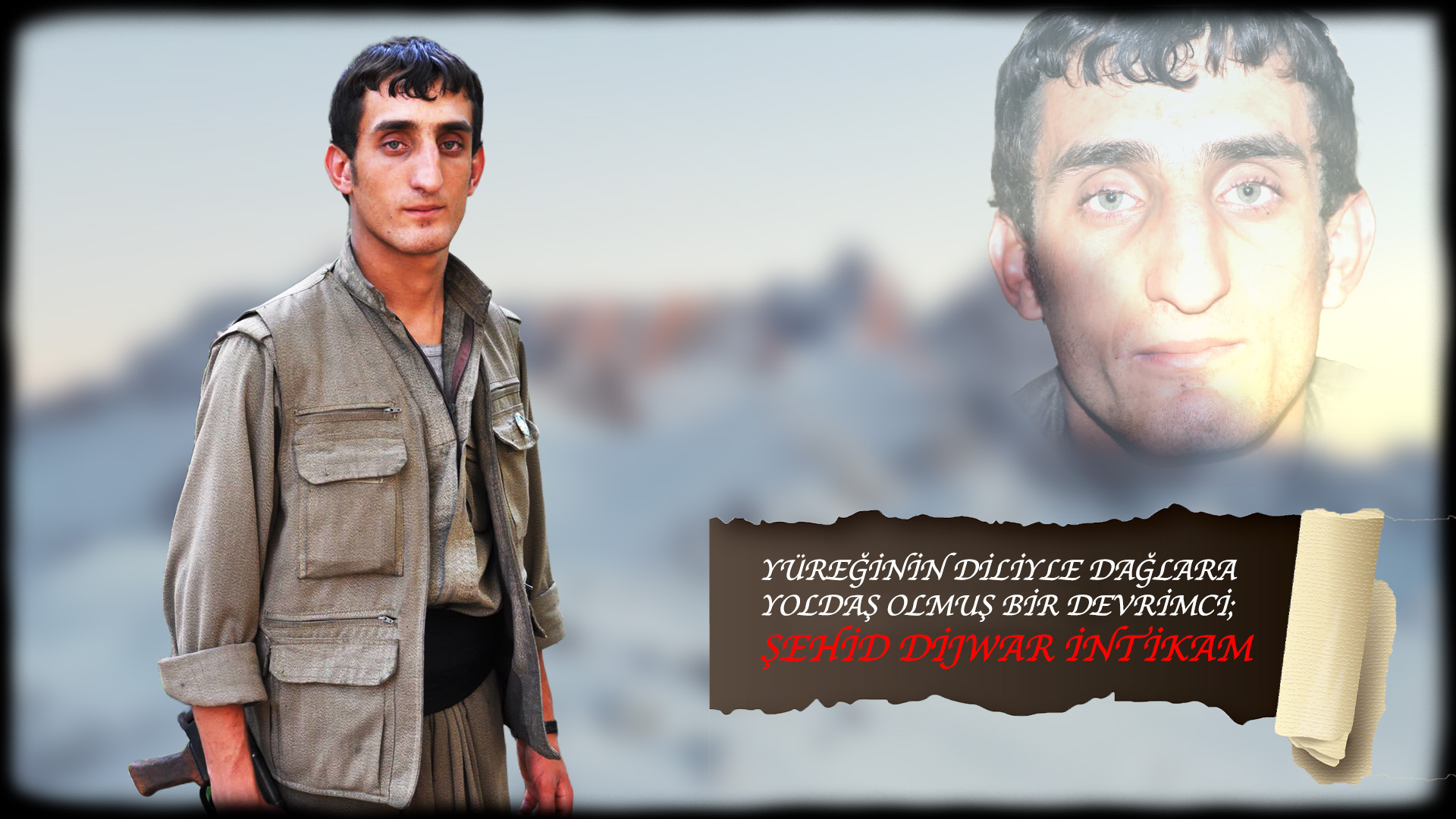
The word love is, in truth, a very enchanted word. From the birth of a human being until death, love becomes one’s life companion, one’s comrade on the road, and the keeper of one’s secrets.
It is a love that a person sometimes cannot express even to oneself, nor to another, nor even to the closest person; a love that grows deeper inside, takes root, and turns toward something. All ideas, myths, historical narratives, and religions are built upon this word. To love something, to become attached to it, and to follow it for an entire lifetime — this is a very sacred feeling. Love is awareness; it is giving value and being seen as valuable. Yet the love a person holds for the land where their roots have grown, for their essence, and for the struggle to be oneself, is something else entirely. This love is a return to the essence. It is the search for being oneself and becoming a traveler on a path filled with many hardships and trials.
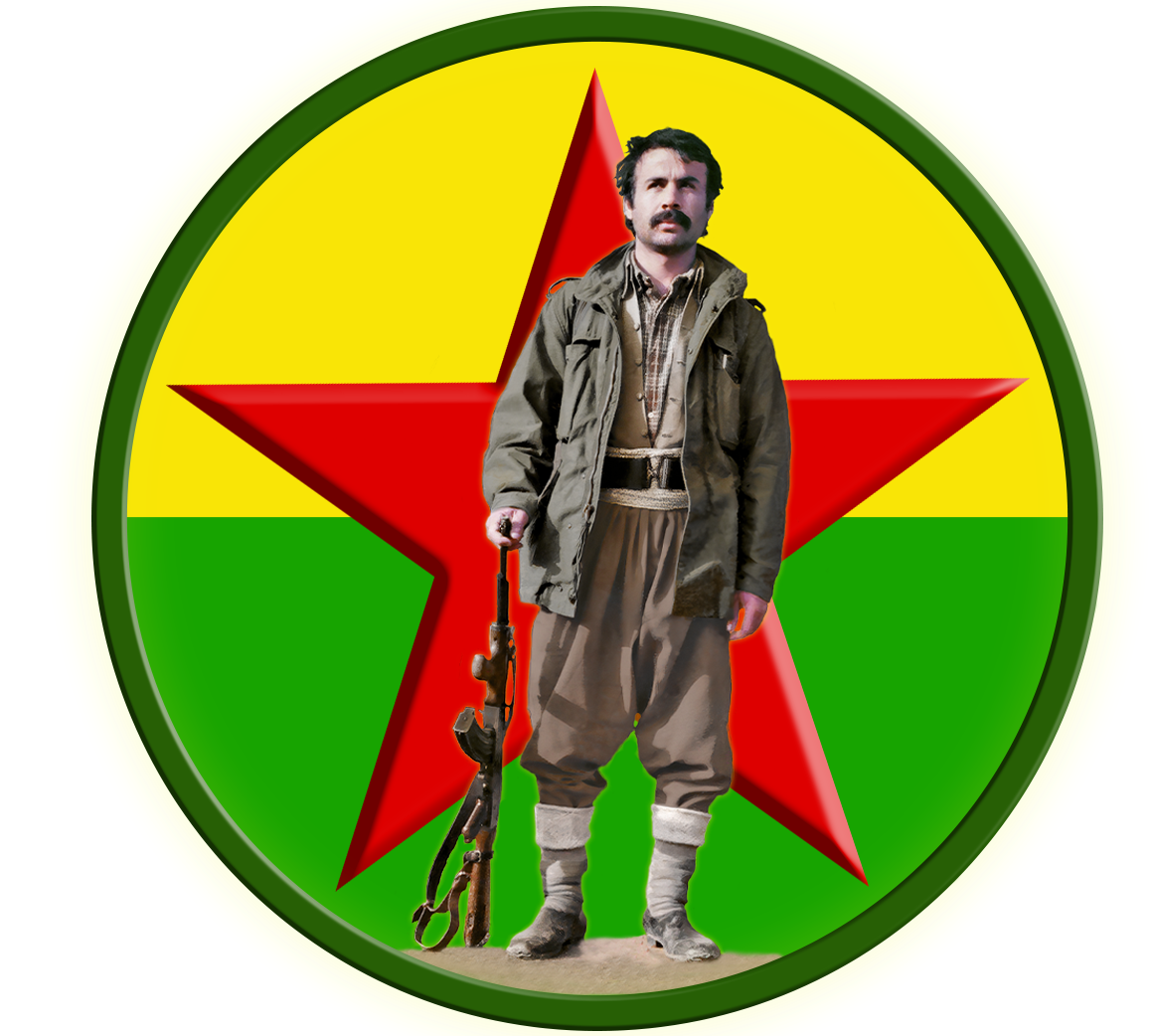
One of the peoples who know this best is the Kurdish people. Their homeland was seized and taken from them for centuries, their labor was exploited, and every kind of obstacle was placed before their becoming themselves, with the aim of transforming them into someone else. Kurdistan was first divided into two parts, and then into four, with the aim of distancing and severing the Kurdish people from their eternal homeland. The city of Colemêrg has lived this reality intensely. The people of this city, who have endured many hardships in order to protect their essential identity, have always loved and embraced with their hearts the struggle for their existence and their homeland. One of them was Martyr Dijwar Intiqam, whose real name was Isa Aslan.
Isa opened his eyes to life in a patriotic family that embraced this reality. From childhood, he grew up with the love of country and people that his family instilled in him. With the upbringing he received from his family, he was raised with a beautiful morality. Because the city where he was born was a city that had brought forth many warriors from the heart of the Kurdish people, the stories of these warriors had reached the present day from tongue to tongue. He, too, grew up with these stories. In his imagination, he saw these warriors as mythological heroes and, deep within, admired and aspired to them.
Language is the interpreter of many human emotions. Language is the means through which longing, feeling, anger, joy, pride, and ultimately life itself are understood. At the same time, it is also memory. Because Isa had a stutter, he lived all of these within his heart. He learned to express what he wanted to say, and the storms breaking inside him, through the movements of his hands and arms. He loved reading and learning new things, and for this reason he was always successful in the schools of the system. Yet in those schools, he witnessed how the reality of his people was denied. Thus, the storms already raging within him grew even stronger. Being taken by force into military service also became an important threshold in his personality.
When he was taken into the army in 2014 under compulsory military service, he experienced great hardships. In the army, he not only witnessed more clearly the filth that the system carried within itself, but over time he also became convinced that he had to find a way of liberation from it. In that same year, the beginning of the genocidal attack against our Yazidi people in Shengal caused him to say: enough is enough. He fled from the Turkish state’s military base in Maraş and joined the guerrilla ranks in the Zagros.
In the guerrilla ranks, he chose the name Dijwar, meaning hard, harsh, and impassable like the Zagros, and he chose the code surname Intiqam, meaning revenge, in order to avenge the pains inflicted upon the Kurdish people for hundreds of years.
Because Dijwar had learned from a young age to live everything in his heart, he had a personality with strong perception. For this reason, it did not take him long to absorb guerrilla life and to raise the sense of belonging to the level of consciousness with strong perception. Because of his stutter, he could not speak much; yet he placed very great meanings into few words and expressed what was in his heart through them. He stated that he had escaped from the dirty regime of the Turkish state and had come into the pure PKK environment, clean like the water of life, and that he had been born again. With a great joy for life, high morale, and enthusiasm, he joined guerrilla life and tried to learn everything.
With his sincere and pure personality, he became indispensable to his comrades. It did not take long for his comrades to understand what each of his states and movements meant. For he knew how to prevent stuttering from becoming a deficiency, and in his relationships he had a very social and loving character. Whatever the system had stolen from him, he acted with a sense of revenge against it and embedded the noble virtues of Apoist militancy into his personality. He developed and became skilled in military art, while also reaching an important level in becoming a capable party militant.
With his labor, effort, sincere participation in life, and genuine comradeship, Dijwar won the love of his comrades in every environment he entered. He surely left a mark on everyone he touched and everyone he greeted. Whoever knew him once could never forget him again. Some things are written in a person’s mind, while others are written in a person’s heart. Those written in the heart become one’s life companion and partner in destiny, because forgetting them is impossible. Dijwar was one of these people.
The mountains were not foreign to him. He knew the mountains well, and the mountains knew him. That is why, in the harsh and difficult geography of the Zagros, he developed moment by moment like a wild mountain goat. With a heart full of anger toward the enemy, and endless love for his homeland, his struggle, and his comrades, he ran from summit to summit, trying to fulfill every duty he took on in the most deserving way.
What meaning do years have for a life lived in pursuit of freedom and truth? Is not one day of such a life equal to years? Dijwar was aware of this truth. That is why he lived each day as though it were a lifetime, and advanced on the path he walked. Sadly, as a result of an unfortunate air attack that took place in May 2017, he reached martyrdom, leaving behind unforgettable memories and beauties.