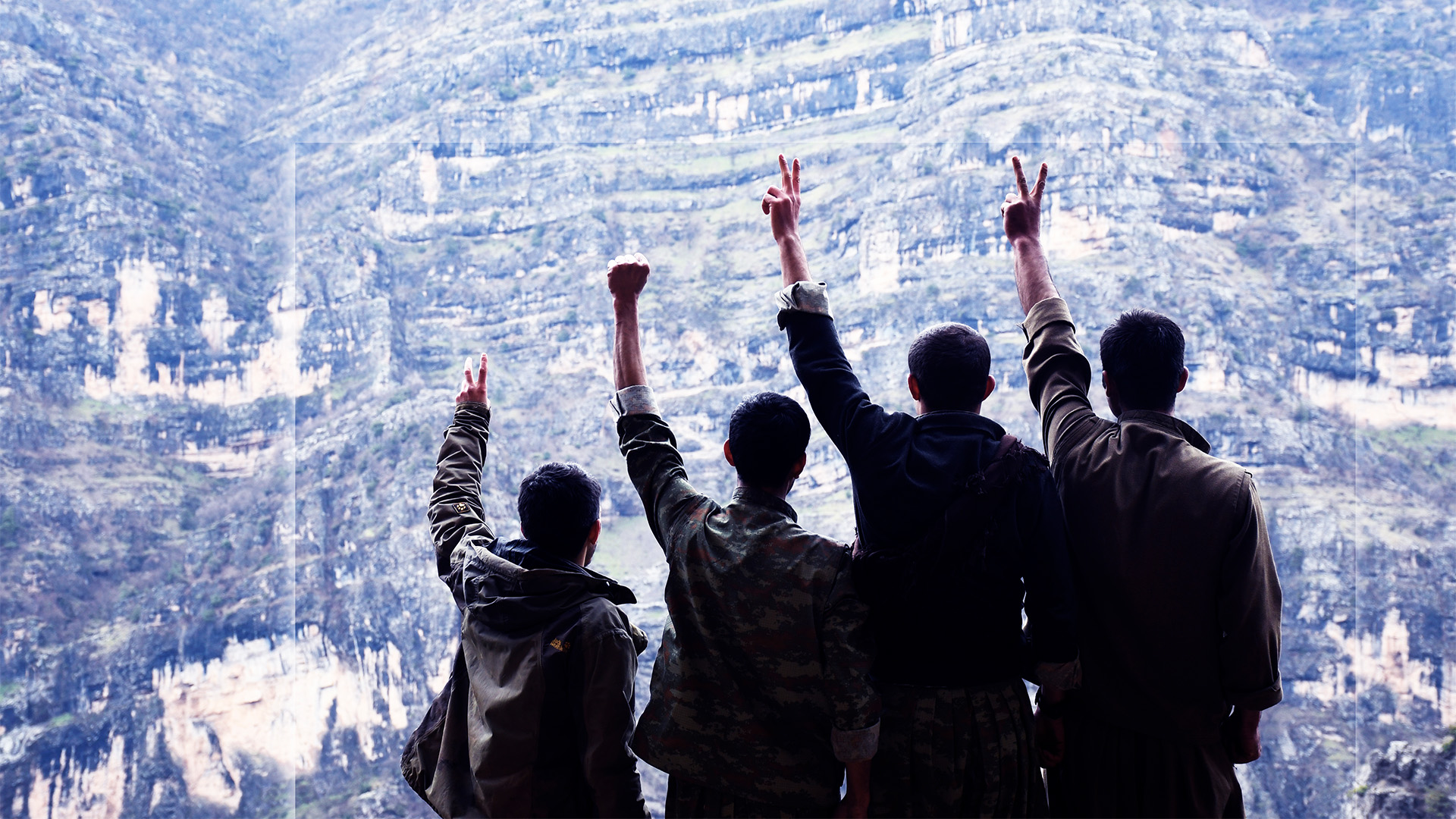
Kurdistan is a living, endless image: deep valleys, defiant mountains, bottomless cliffs, boundless highland pastures, life-giving streams, forests that have resisted for years, and soil that nourishes thousands of living beings.
Geography is a reality that shapes a person's character, existence, and formation. On their own land and within their own geography, people acquire identity, culture, and art. The lands and mountains inhabited by the Kurdish people have likewise defined their identity.
Avaşîn is part of this land and geography; it has given life to thousands of souls and become their home. Neighboring Cîlo and Çarçella as well as Zap and Şemzînan, it has embraced many legends and ancient peoples upon its soil.
To protect and defend itself against many wars and attacks, the Kurdish people made the mountains their home. They labored and shed sweat on this soil and in these mountains. They drew from this land the inspiration for a culture and art that enchant people. Through labor and awareness they made the land more beautiful, doing everything in their power to preserve and enrich its fertile soil.
Throughout history, Kurdistan has opened its embrace not only to the Kurdish people but to many nations, civilizations, religions, and peoples. To defend themselves, these ancient peoples built inaccessible walls, shelters, and refuges upon the mountain peaks. As history itself shows, is self-defense not the act of becoming oneself?
It is said that people find themselves wherever they labor and shed their sweat, because there they become aware of themselves. As awareness grows, everything acquires meaning. With meaning comes beauty, and the struggle to reach one's purpose develops. Then a person's marathon with the self begins.
Avaşîn is a geography that bears witness to this truth. Through the guerrilla struggle it gained a new place in history; just as it offered a home in earlier ages, today it occupies an important place in the guerrilla struggle. Having witnessed countless acts of heroism and courage, Avaşîn has now become the land of roots and the abode of the martyrs.
The history may not be distant, but was it not Avaşîn that gave life to Cumalî, Çavrê, Mahir, Ekin, Diyana, Medenî, Hêmîn, Arnos, Gaffur, Rahîme, Zerdeşt, Şiyar, and Nûcan? We said that geography shapes character. Precisely here, as we speak of these fallen comrades, we see the values Avaşîn created. These heroes and many others were as fierce and resistant as Avaşîn itself. To be with them is to taste, touch, and breathe in Avaşîn's water, soil, stone, and air. To belong to Avaşîn was to become guerrilla. To be Hêmîn was to remain alone for days beside fallen comrades and resist. To be Medenî was to uphold the claim to success and victory despite every hardship. To be Arnos was to embrace life with all its difficulties and beauty. To be Diyana was to touch the hearts of comrades. To be Ekin was to become a monument to immense courage and humility. To be Cumalî, Çavrê, Mahir, Amara, Adîfe, Devran, Ernesto, Delîl, Serhed, Sarya, Botan, and Özgür was to resist the technology the enemy used tirelessly and desperately and to remain bound to hope. In short, it was to become one with one's companions on the journey of victory and hope and run with them toward free tomorrows.
If today we can walk rightly upon the path, and as long as our history and our comrades rooted in the motherland accompany us, our backs will never be brought to the ground and our feet will not stumble over any obstacle.