
Those with hearts of steel walked through the mountains toward light with great hopes and aims, flowing toward freedom and a life of dignity.
They understood life's true meaning and turned toward the sacred temples, the abode of the goddess Ishtar. Believing in their strength, they deepened their search to know themselves anew and advanced step by step toward the mountains. The noble Kurdish woman Ekîn Dilda was part of this quest and set out toward her dreams and curiosity.
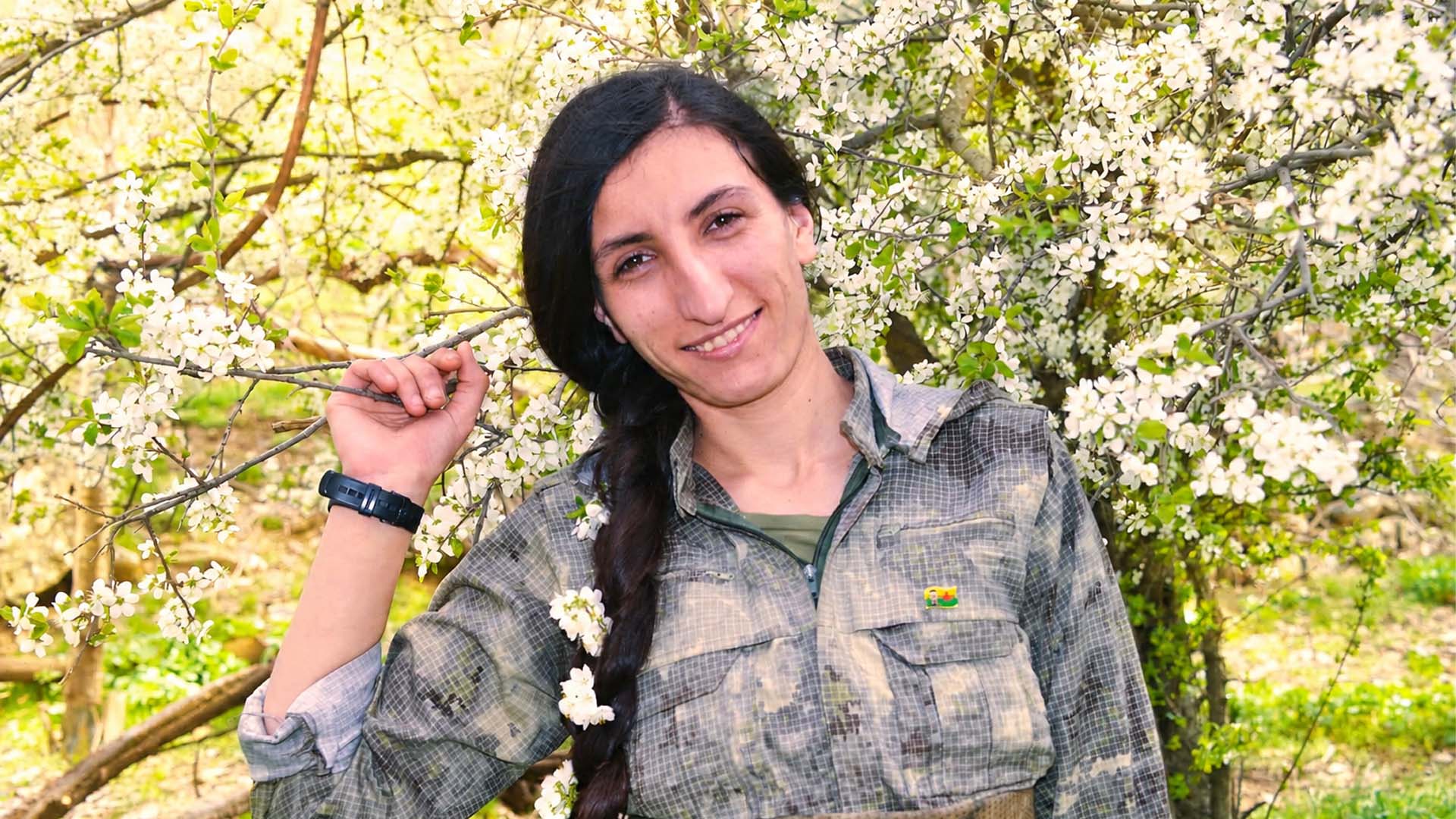
Ekîn Dilda, whose civil name was Zelîha Mahçop, was born in Qereyazî, Erzîrom. She grew up in a Kurdish patriotic family that upheld its spiritual and ideological values. Many family members joined the freedom movement, and some reached martyrdom in the liberation war. These participations and sacrifices deeply shaped Ekîn and rooted her attachment to Kurdish culture. She grew through the memory of those heroes, living the finest moments of childhood while gradually building herself. Thus, upon reaching awareness, she possessed gravity and knowledge.
Ekîn observed the system that daily forced Kurds into migration, the schools that emptied children's minds, and the lullabies of mothers. Seeing all this and recognizing the truth of the Apoist movement, she chose her own road. She wished to follow her family's martyrs, pledged to continue their path, and lovingly turned toward the mountain slopes.
She adopted the name Ekîn Dilda to continue the road of her martyred comrades. In the Apoist movement, bearing a martyr's name is a sacred and weighty duty. When she took her first step upon those slopes, she chose it so their memory would remain forever alive.
Love of mountain life created a great hope extending to beautiful, inaccessible rocks and cliffs. As desire grows, so does the aim. Ekîn knew her existence and identity within her family and therefore entered the mountains with curiosity. She first received new-fighter training and came to know mountain life and its hardships more deeply.
She took her first steps in Zap. Though a new fighter, she was the most active among her comrades. She approached life with great love and developed in every field. As she looked at those mountains, the spirit of patriotism within her grew stronger.
Ekîn was not satisfied with that training. Conscious of the period, she wished to specialize in weapons. She took a sniper course and sought to learn every weapon. Militarily and ideologically she became a powerful personality capable of conducting work in practice.
The noble woman Ekîn was modest and possessed standards and principles. She sacrificed and labored for the cause, remained attached to her existence until the end, and stood ready for every organizational duty, developing herself for the front lines. She gained the strength to carry revolutionary responsibility, assume duties, and lead life. For Ekîn, above all a person must labor and become a true leader in life. She followed her pledge and helped comrades through experience, speaking little and working much. However difficult the period, she never abandoned her responsible spirit. In the mountains she learned to know her belief and strength, and difficult practice increased her trust in herself and her comrades. She never broke from practice and participated actively and courageously in war and life at the front.
After specialist training and accumulated experience, Ekîn Dilda entered the fields of practice. For her, they were places to discover her strength and gain essential confidence. With this desire she went to Xakurkê.
As war intensified in the Medya Defense Areas, Ekîn entered those fields with a pledge of revenge. Just as Xakurkê was the home of Bêrîtan and Egîd, her central duty was to follow them and uphold history. Every militant of the freedom movement had pledged revenge to defend the martyrs' cause and follow their tracks.
On her journey to Xakurkê's summits, Ekîn moved breath by breath, step by step across the varied terrain. Through sacrifice and sincerity she played an active role in tunnel work. Against an enemy that tried to build obstacles, she created alternatives through her inherent strength and continued labor without interruption.
She and her comrades worked day and night to prepare strongly against the enemy, placing their labor in the revolution's service. She joined them in every duty and helped through the confidence she had gained.
As a self-confident woman, Ekîn's responsibility grew heavier. Wherever there was need, she was there, carrying out her work with great devotion.
Ekîn gained the strength of action in the Bazên Zagros Offensive, which included great pioneers. In Xakurkê she became one of those who left the enemy no space in any trench. She therefore took stronger measures in the terrain, always standing guard over those mountains.
She was deeply affected by the resistance in the war tunnels. Even when not inside them, she lived with their spirit and with every comrade fighting and writing epics there. She embodied the shared spirit of Leader Apo's militants and became a personality that would live through tunnel resistance wherever she was and advance her work without hesitation.
Until her final breath, Ekîn carried out every task as a believing, leading woman with determined participation. The occupying enemy faced a great obstacle in guerrilla resistance and activity and found relief only by bombing the mountains with its technology. Yet it did not know that courageous guerrillas lost none of their strength through such methods, for they believed in their inherent power and Leader Apo's thought.
On 6 October 2024, Ekîn and her comrade Mîtra Manî reached martyrdom in an occupation air strike. With all her strength she lived and fought beside her comrades and became an immortal pioneer. She built herself through life's hardship and beauty and gave strength to those around her. Until the final moment she stood by her decision and pledge to the martyrs, fought, and inscribed her name in the history of the Kurdish people.