One April morning, we opened our eyes to a new day with the sound of birds. Our journey towards Çarçella was about to begin.
After the preparations, it was time to say goodbye. A comrade behind us called out the slogan, “Our freedom is our dignity.” This made the comrades laugh. Until then, in both our conscious and subconscious minds, everything concerning honour had been associated with women. After a brief moment’s thought, I too had laughed. I regretted it. All precious values that need protecting should be matters of honour. Much has been said about freedom, and many assessments have been made of honour, so there is no need to add my own interpretations here.
As is known, philosophy is interpreted as the love of knowledge. Over thousands of years, many subjects have been discussed. Many debates and disagreements have arisen. One such question is, “Who is more knowledgeable: someone who has read or someone who has travelled?” Discussions of this question have often reached an impasse and remained inconclusive. In my view, however, each is enriched by the other and gains meaning through it. Someone who has read but does not put their knowledge into practice, keeping it only within themselves, neither understands the event or subject nor amounts to more than a merchant. Those who have travelled and have rich life experience but lack theoretical knowledge will remain limited in their ability to give meaning. Another aspect of this question is literary expression. For example, someone may have travelled through our country, which is a piece of paradise, but if their powers of expression and literary narration are not strong—in other words, if their store of words is not rich—they cannot describe it in a manner worthy of its value. Likewise, someone who has read or is skilled in literature, but has not seen a particular beauty or place, cannot compose sentences that do justice to its beauty or describe it as it deserves.
Some time ago, I had read several pieces about the regions of Kurdistan. When Gabar, Cudî and Herekol were described, I felt deep regret at having been deprived of those beauties. Because I had not seen those places—that is, had not lived in them—they did not stay long in my mind. But a place one has seen and lived in is not quickly forgotten. Before I came to Çarçella, the beauty of this region had often been described in ornate sentences. Alongside its beauty, people also spoke of the difficulty and ruggedness of its terrain. Now I am with my comrades on Çarçella’s highest mountain.
One stop on our journey was Dola Bîra. I had asked the comrades why this valley was called Geliyê Bîra. My comrades asked others, but they did not really know either. It is thought, however, that there may be old wells in this region. Because we did not leave the footpath, I saw only one well. There was also a spring encased in concrete, but both the well and the spring had dried up because the inhabitants had been absent for a long time. A little later, a cemetery disappearing into the greenery and a field of şilêr flowers brought paradise to mind. It was striking that so many şilêr flowers had grown in that area, particularly in and around the cemetery. As is known, şilêr flowers grow especially in the Zagros and are red flowers with curving necks: their flower heads face downwards. Often they conceal a drop of water within them. Whenever I see şilêr flowers, I liken their fate to that of Kurdistan. This land has always known pain, sorrow, plunder, war and destruction. Tears have always flowed from the eyes of mothers and children. In other words, they have mostly lived in sadness. Kurdish children have grown up with that pain and suffering. Şilêr flowers and Kurdish children resemble one another. Through their beauty and loveliness, both strengthen the love of life and the bond with it.
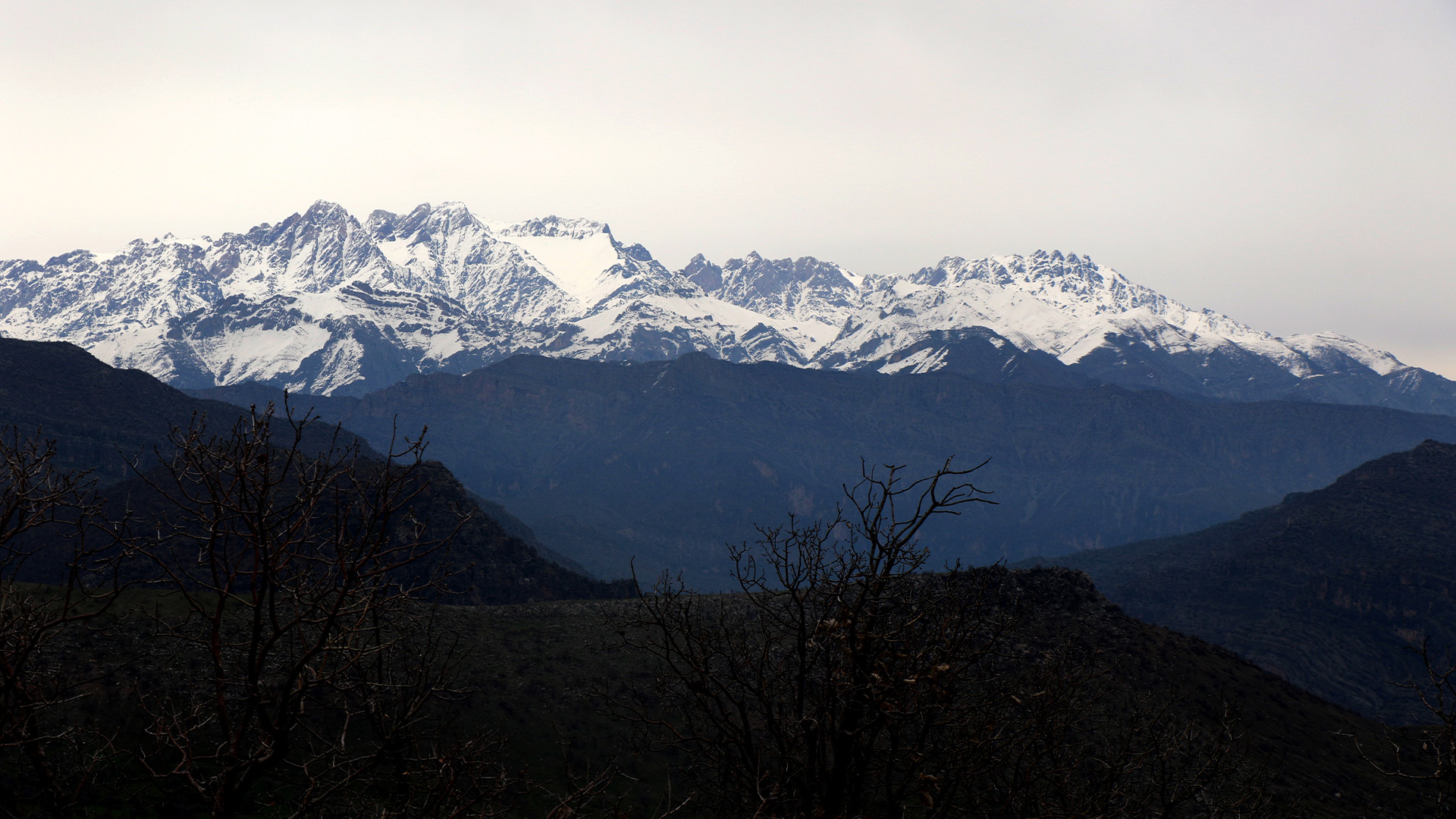
After Dola Bîra, we headed for the Şikêr Pass. From here, all the beauty of Çarçella was visible, as were the four rocks that gave the region its name. A few hours later we reached Avaşîn. Avaşîn is renowned; dozens of songs, poems and articles have been written about it. However much is written, one cannot describe it as it deserves. It is a piece of paradise. We walked over a bridge and crossed Avaşîn.
Here lies Dola Çinarê. Whenever I pass through here, I remember this saying: “They asked the plane tree, ‘Why is your life so long?’ The plane tree replied, ‘Because I am rooted in my soil.’” I see a likeness between the plane tree and the guerrilla. Both are rooted in their land. Physically, life may not be long, but spiritually it is immortal. We spent that night there, and the next day we travelled the long route from Dola Çinara to its pass, where plane trees adorned every part, reaching another stop before noon. It was not simply another stop: this was both the beginning of the Çarçella area and the end of the Avaşîn area. Here the seasons change too. As we moved forwards, the season turned backwards. We had been living in spring, but here it was winter. There was snow everywhere. Something very striking happened here as well. When we first reached the pass, the sky was clear. Before long, hail fell, followed by rain and finally snow. I was astonished. How could the weather change so much in such a short time? When we began walking, the sun had come out too. We descended from the pass, and ahead of us lay Gundê Satê, a piece of paradise. On the way, I photographed a spring flower whose name I did not know. When the comrade beside me saw this, he made a striking remark: “There are thousands of kinds of flowers like this in Çarçella; you’ll see many more yet.” So I stopped photographing flowers. We reached Gundê Satê, where the rain had also begun. When I saw the village in ruins, sad feelings surrounded me; it was as though the falling rain turned into tears, weeping in my eyes’ stead. The comrade beside me and I walked around the village, photographed these places and discussed the village. It was very large, built entirely of stone. A river flowed beside it, and one would say that this river was what gave the village life. Hundreds of small fields, every kind of fruit tree, poplars and plane trees enchanted one, while also intensifying hatred and anger towards the occupiers who had devastated our country and our people…
However much one speaks of the beauty of this country, it will never be enough, and the pages themselves would not suffice. From here onwards, winter prevailed; everywhere was white with snow. Had nature put on a shroud or a bridal dress? An unanswered question… From here onwards, the terrain no longer resembled what we had left behind. Rugged, high paths full of dangers. This steep and difficult road lay ahead of us. After a long journey along the edges of the snow, we reached the comrades. The harder the road and the more difficult the conditions, the greater one’s attachment becomes. Wherever a person has invested much labour, they become all the more attached to that land. This truth applies above all to the guerrilla. After a few days with the comrades, an even more difficult journey lay ahead. But first, an important matter I had forgotten must also be mentioned: the borders created by the occupiers. With these borders they have severed our people from one another, to grind them down, dissolve them and assimilate them through a culture of lies within the system of occupation. Before we reached them, the concrete border stones stood along our path, lifeless, cold and far removed from reality. They were the symbol of occupation; with those concrete stones, my country had been partitioned and occupied. Gundê Satê was the very first village in Bakur. That is, what came after it would take place in the Bakur area. My account would unfold on the soil of Bakur. After seven years, I am once again on the soil of Bakur. For that reason, I feel at peace. In the hope that every person who seeks freedom may reach this paradise on earth.
Memyan Jiyanda