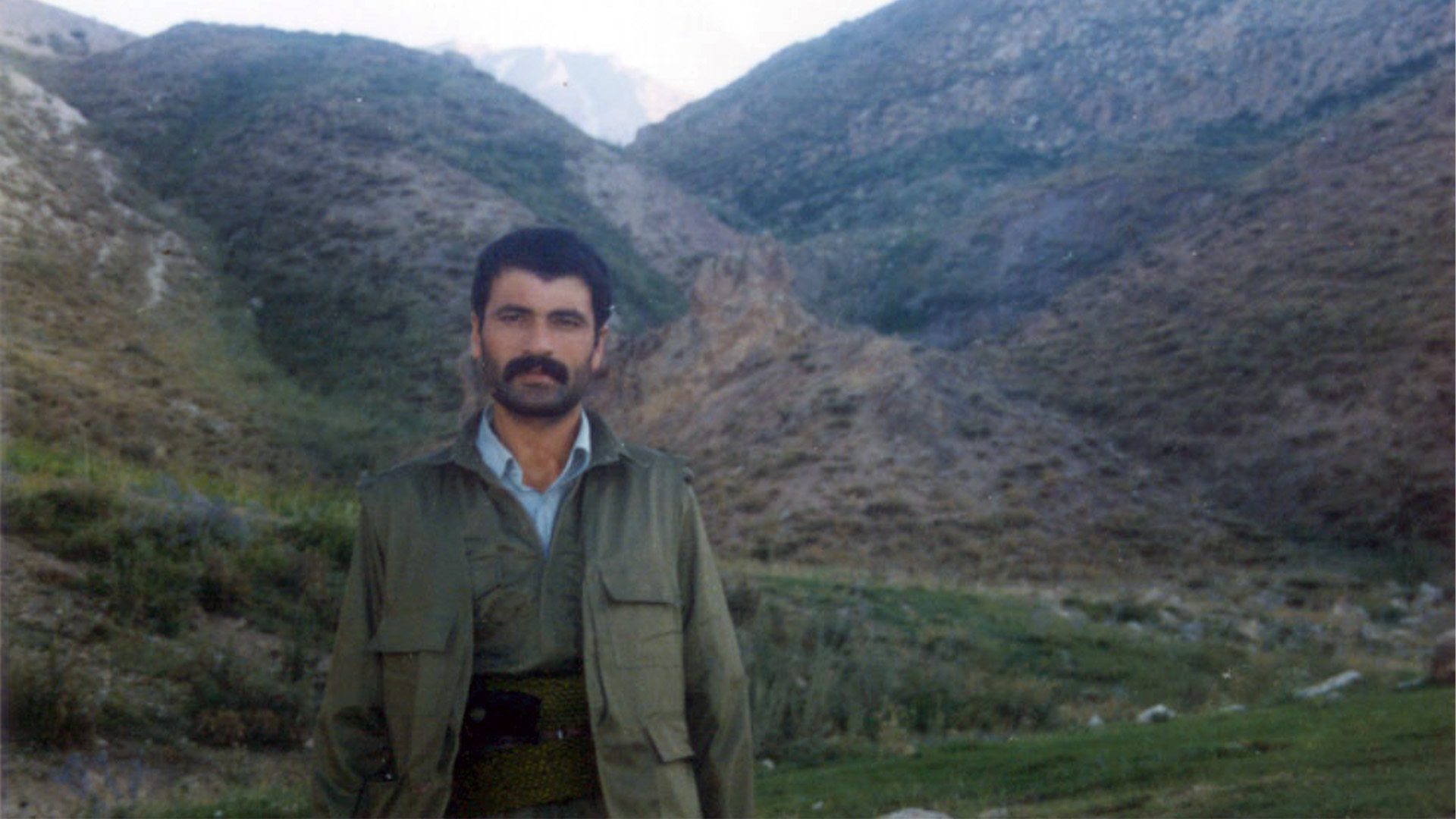
Morning had come, and the warnings given the previous evening had been followed to the letter until sunrise. Our entire day had passed making places for the squads. It was March 10, 1997.
Days followed one another, and what strained us most was the rain, or worse than that, the hail that at times almost paralyzed life. The Newroz holiday had arrived. Usually Newroz is celebrated among the guerrillas with enthusiasm, but since we had no possibility of preparing anything, we would have to content ourselves with lighting a fire. Toward evening, one group of comrades had been sent to light a fire somewhere far from us, across from Şırnak. Another group had been sent to a high place on the Kumçatı (Der-güle) side to light a fire. Even if we could not celebrate properly, we would light fires for our people and celebrate their Newroz. They would be happy when they saw our fire, because we too were happy when we saw theirs. Toward evening fires began to burn on the high hills, but the rain that started as soon as darkness fell put out the fires the comrades had lit within a short time.
When the groups that had gone to light the fires returned, comrade Mazlum was very angry.
"May it be easy, comrade Mazlum. How did the task go?"
"Thank you, comrade. Do you really think it would be right if I said it went well? Tonight I feel like fighting and struggling more for freedom. I understand much better now what freedom means. I cannot celebrate my holiday in comfort. I am in the mountains, with a weapon in my hand, but our people are unarmed and defenseless. I feel like tearing down the mountains, comrade."
"You are right, comrade Mazlum; I share your anger. But that is exactly why we are struggling. Otherwise, why would we spend days under a nylon tent, on the road, on the hills, in the snow, under the hardest conditions? All of it is for freedom. Even if a person dies a thousand times for freedom, it is still too little, comrade Mazlum. Now come, let us go to our squad. There you can dry your clothes and we will drink some tea. Our platoon commander is there too. You can give your report, and with comrade Gabar we will bring some cheer to the night."
Around noon on March 29, a comrade came up to me and said, "Go to the administration. They are calling you."
I had reached the door of the squad place. After asking permission, I went inside; besides our platoon commander, comrades Bedran, Koçer, Aldar, Newroz, and Têkoşîn were also seated there. Our platoon commander, comrade Berxwedan, said, "Comrades, the reason we have gathered is a task. Comrades Bedran, Kahraman, and Aldar will go to Besta. You will take a group coming from Garzan province as far as Besta. Until there, the group will be under your responsibility. After that, your task will be to take the clothes sent from Haftanin for the Gabar force from the Beytüşşebap force and return. Is there any point you want to raise, or any comrade who is not ready? Then success to you, and be very careful. Those comrades have been on the road for a long time before reaching here; they are tired and have passed through many dangers. From here to there as well, the comrades are entrusted to you. Be very careful when crossing the Eruh-Şırnak road; that place is dangerous. Stay alert..."
We had also discussed it among ourselves as a group. Together with comrade Aldar, I would be in the lead. Especially in places that posed danger, we would walk at the front. The other comrades would follow us. On the way to Besta, we had to pass through this place between Serxwebun and Çırav. Until the group arrived, we would conduct reconnaissance here. The comrades would come in the dark. With comrade Aldar, we had reached our position without exposing ourselves. The main places we would scout were the Eruh-Şırnak road, in other words our crossing line where the enemy sometimes set ambushes. Comrade Aldar had also checked the water. For now everything looked normal.
When darkness fell, the group caught up with us and we set out toward Besta. We encountered no problem and crossed the road without accident or trouble. The most important difficulty before us now was the muddy roads of the Bestler terrain. For a while we advanced along a vehicle road that had previously been opened by bulldozer; then, after entering the footpath and walking another hour, we took a short break. It was so cold that some were falling asleep on their feet.
When we reached the point, a few comrades welcomed us and told us where we would stay. Our group settled squad by squad in the places shown to us, and a report was given to a comrade from the administration there. In the guerrilla they call it hospitality, but in truth the relationship and respect of comradeship is the more valid concept. The comrades connected to that place met the tea and food needs of the others, and with their warm approach they tried to make them comfortable. After giving our report, we talked with the comrades at length.
The next day, the group we had brought set out toward Cudi. As the courier group, we came together, took the report on the course of the road, and reorganized. We were advancing in single file behind comrade Şiyar toward the village of Avyan. Fifteen minutes before Avyan, when we tried our luck one last time, this time the device connection was established. Hearing their voices made us forget our fatigue a little.
"We are probably close to you. We will fire a shot!"
"All right, fire it, stay at that center, and we will send comrades to pick you up." The person speaking was the responsible comrade of the Beytüşşebap force. After waiting for a while, the comrades came to get us. After staying there for two days, we loaded the clothes onto two mules and set out to return to Besta. After a long march we stopped in a kap to sleep. By morning, the rain that had fallen since evening had stopped. Comrade Bedran said, "Come on, get ready, we are leaving." "Why, what happened?"
"There is a group an hour from here. We will go and take them, and we will bring them to Gabar as well. Tonight we will stay with them, and tomorrow evening we will set out. I do not know what group it is or where they are going. The only thing I know is that comrade Ahmet Rapo is also with them."
"All right, then let us go at once so we reach their point before dark. The weather conditions in the Bestler are never predictable; before you know it, they can change all at once and we may be caught in the rain."
I had not seen comrade Ahmet Rapo since 1994. In truth, even then we had not been able to meet much. After the operation he had gone south, and three or four years had passed since we had last seen each other. When we reached the point, we saw that the group consisted of five or six squads. This could create considerable difficulty for the march. When we went to the squad where comrade Ahmet was, after asking whether we were the Gabar force, he asked each of our names and said, "We number forty; with you we become forty-five people. If we are not careful, it will be bad, won't it?"
"Yes, comrade."
When we got up in the morning, the weather was cloudy. After a little rain in the afternoon, snow began to fall; after whitening the ground it stopped, and toward evening it gave way to a north wind that scattered all the clouds aside. After comrade Ahmet spoke a little about the points we had to be careful about on the road, as darkness pressed down, we too were mixing into the dark.
We had come close to the Şırnak road. Since the day we arrived, the waters had risen. We were forced to strike into the water and cross, but five minutes after coming out of the water our shalwars had become like boards from the cold. Since stopping in this situation was dangerous, we kept walking without any halt. When we reached the edge of Kızılsu, we all stopped and stared at the water in astonishment. Kızılsu too had become at least as large as the Tigris water.
"Comrade Ahmet, what shall we do?"
"Wait one minute. Let four strong comrades who can withstand water come forward." When the comrades came out, he said, "Open your şutiks; ten or twenty meters is enough, but make it strong. Be a little quick. It would not be good to lose martyrs to the cold. Take the end of the şutik and cross to the other side." When the four comrades entered the water holding hands, the water came up to their chests. Comrade Ahmet kept running from place to place, telling us, "Come on, do not stand still. Whoever crosses the water must not stop; exercise, jump!" Holding on to the şutik, people crossed one by one, and each comrade's crossing took three or four minutes. Those who crossed got wet, and when the north wind was added to this, it strained the comrades greatly. So much so that one or two of the comrades who had crossed to the other side fainted from the cold. After everyone had crossed, comrade Ahmet said, "Kahraman! Bedran! Comrades, walk without stopping at all; whoever stops will freeze. Morning is already coming. It is not clear how safe a place we can reach in three hours, but still walk as fast as possible."
We were walking without stopping. Sometimes, when the group broke apart and we stopped at the order "Stop!" coming from behind, the sleep of death pressed down on us no matter how much we tried to resist. Morning was about to break, and we were still across from the Şırnak and Dergule battalions. Comrade Ahmet was going back and forth, trying to make sure all the comrades kept walking. At one point when he came to the front, we began talking with him. At first he did not recognize me, but when I told him my old name, he remembered. While we were speaking about what we had lived through in the battalion where we had stayed together, we did not realize how the road passed, and without noticing it we had crossed the dangerous place. Even if the sun rose now, not much would change. After staying there until noon, we set out around midday to reach the unit. At the end of a two-hour walk, we reached our unit, which had come to the village of Zıvıngo. Comrade Ahmet's group, which spent the night with our unit, went early in the morning to the other unit in Gabar, where our regional commander was also with them. Comrade Ahmet, who had come only to bring this group safely to Gabar, would return to his place after delivering the group.
Around noon, comrade Ahmet returned from Gabar with four new fighters and two old comrades. We all sat together in a grassy place. Talking with comrade Ahmet was in itself morale and education. After talking until evening, we went together to the edge of Kızılsu, and when we went a little lower to the place where the water split in two, comrade Ahmet said this place was suitable. Comrades Hawar and Rıfat were also with us. Comrade Ahmet said, "Come on, open your şutiks and tie them together. This place is about thirty meters wide." The old comrades who were with comrade Ahmet held one end of the şutik and crossed to the other side; one stayed there, while the other came back to us. After passing the new comrades across one by one, we said farewell to them as well.
Comrade Ahmet was the last to cross the water. "Take good care of yourselves, be careful, farewell!"
"Success, comrade!" After comrade Ahmet crossed the water, he called to us again from the other side: "Take good care of yourselves, give my greetings to the comrades!"
After the group began moving through the darkness, we stayed where we were until they disappeared from sight. Even though we had not seen comrade Agit, whenever a person saw comrade Ahmet, who was his fighter, it was impossible not to remember comrade Agit.
Although comrade Ahmet crossed Besta with his group that night, when daylight came before they could reach a safe place, the hill of Çele le Mejê, the upper hill of Şırnak, noticed them and they became the target of tank fire. With the tank fire, when the new fighters panicked, comrade Ahmet wanted to save them, and at that moment the tank fire struck him too. When we learned what had happened two days after the incident, none of us even wanted to hear such a thing, and we could not believe it. In the face of such a situation, the only thing left for us to do was to keep their memories alive and to be worthy of them. For us, who are travelers on their luminous road, being worthy of them will mean turning sorrow into the enthusiasm of victory for the future.