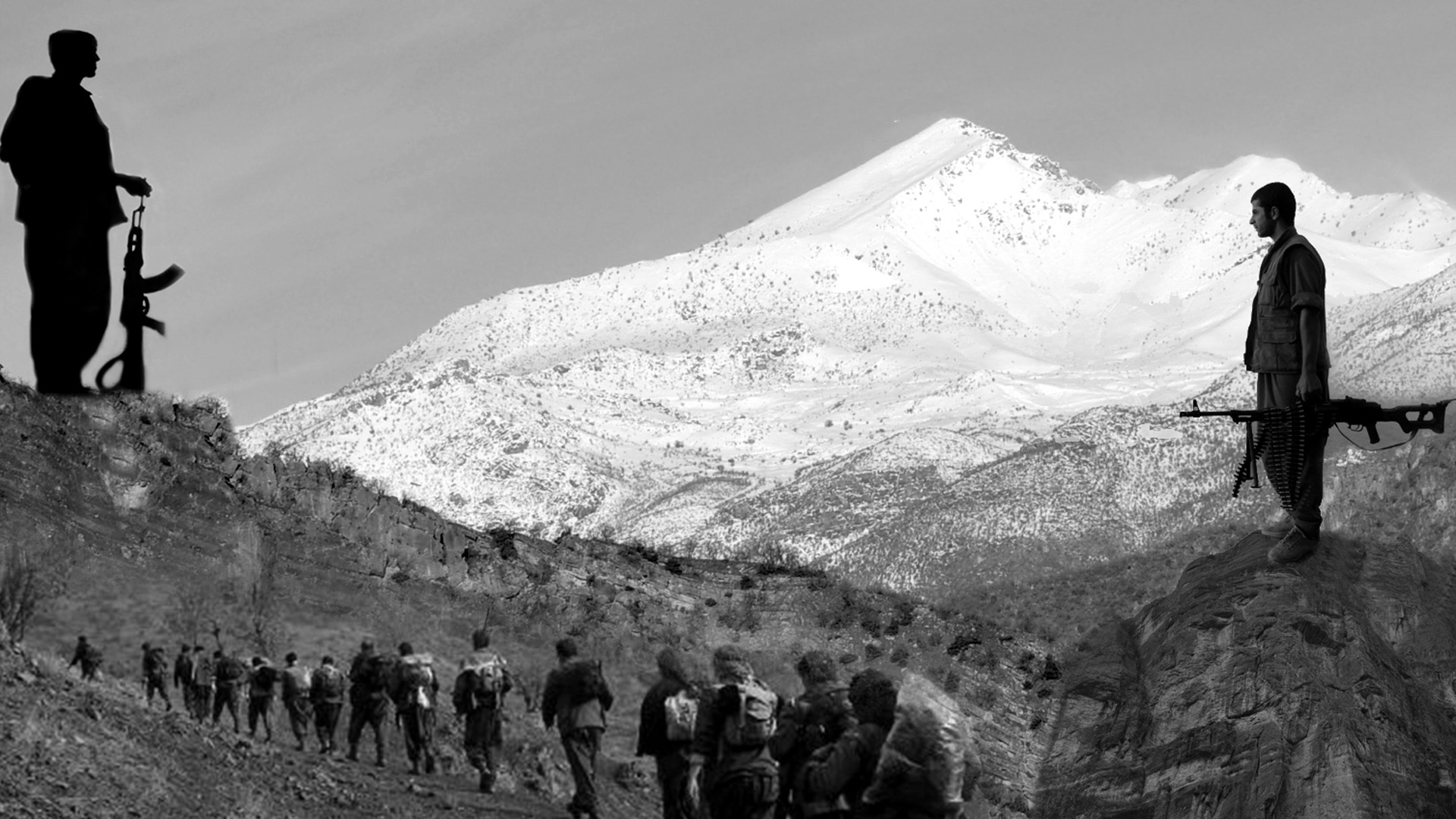
Writing takes heart. Loving the guerrilla demands a price; touching it demands a rebellious life on the peaks. It demands walking above the valleys left beneath the wings of hawks flying over the same mountain, at its highest summits.
It demands a struggle to turn hatred into love, bitterness into sweetness, fighting into peace. A will like steel, fluid like water, free in the skies with its own drop like rain. It demands an independent, free will, like falling to the ground.
Only guerrillas, guerrillas alone, can write and tell the guerrilla; for they are those who become one in the comradeship of a road with the same heart, the same fight, the same yearning for peace and the same fixation on victory. They shield one another in battle, stand arm in arm in hardship and become breath for one another on long, marathon marches. Others undoubtedly write about the guerrilla too; but no one can write as objectively as those who share the same surroundings.
All these words of mine are a recollection woven from the sentences that martyr Botan spoke to me in the heat of battle. At the time I had said, “Who will write about this war of ours? Who will portray this scene as it is?” He had answered, “Only those with the courage can write this war.” It had not been a very long conversation. After all, it was a clash, and we were in the midst of a fierce battle. As we sheltered our bodies behind a rock from hundreds of bullets and a Cobra, I do not know whether some strange feeling was responsible; but it had been a great conversation.
If I believe I have the heart for it, comrade, and I am still not sure. I will try to write those last two sentences of yours. I will try to write how the guerrillas fought, how the enemy attacked and how, apart from losing you alone, we achieved a victorious outcome at Kato.
It was the summer of 2007. Kato's highland pastures would be hot. Usually the days were hot and the nights cold. By day you could not stay in the shade, and you burned in the sun too. On a day when we clung sometimes to burning and sometimes to freezing, we kept shifting involuntarily. As far as we could without exposing ourselves, we drank the melted snow water we extracted from deep hollows and brewed tea with it. We could hear the voices of nomad children gathered at Meydan Kolî and the bleating of sheep stuffing their bellies full. These sounds tell us that noon has arrived and that it is milking time for the nomads and their milkmaids. Unnoticed, from among the long rock formations, we would survey the pastures, the milkmaids and the areas of terrain that offered scope for an operation while on our own watch. Just as noon arrived, we heard that comrade Botan, on his watch too, had seen a group of soldiers walking towards the pastures.
Activity began. Comrade Ferhat and all the other comrades scanned the area. There was a unit. It had come to the pastures. They had come to gather some information and do some observation. They disappeared that same hour. They got into a vehicle and vanished. Comrade Ferhat said, “There will be an operation, and we need to take up positions accordingly.” We moved too and began preparing to meet the next day. Everything was put in a suitable place: the morning scouts, positioning, logistical needs, visible objects at our site and reconnaissance of the path, including all the blocks of snow placed in the sun. Fully equipped, we prepared for battle.
Before morning, before dawn broke, at around 04:00, the whole unit was standing upright. Your excitement mingling with the air and our guerrilla spirit, with its cries of takbir, which made us who we were, were focused intently on an event or occurrence that would break the silence of the terrain. We sensed a faint sound approaching, disturbing all the beauty of nature. Comrade Ferhat, commander of all the fighters, noticed it. With the mention of Sikorsky, predictions of the start of the operation and troop landings had already begun. Likely pasture hilltops and crossing paths were watched keenly. The Sikorskys carried out the landings in conjunction with the Cobras. While infantry soldiers advanced like a ribbon, unit by unit with gaps between them, from Beytüşşebap to Meydan Kole, from there to Warê Kurdu and the Meydan Cahsusa area, soldiers occupied the hillocks above the paths for security. A coordination post had already been established at Gırê Osman, and soldiers had occupied all the pastures. All of Kato's pastures were filled with soldiers in plain view, while Kato sheltered the guerrillas among its stark white, creamy stones. There were two forces. One was the overt movement of soldiers in the pastures, the other the guerrilla units hidden in Kato's corridors. Exposure and concealment were witnessing a war in which, alongside the two military units observing each other and waiting for opportunities, just one force was fixed on its target with incredible attention. Eyes scanned the entire terrain. Their first target was the provisions stored at the base. Their second was to spot a unit and destroy it. The reconnaissance work of the scouts who had come yesterday for information had not been in vain. Everywhere was reconnoitred. Only Kato remained. The soldiers knew we were in Kato, but they could not approach. Neither entering nor leaving Kato was so easy. An operation into Kato required many more soldiers. The surrounding village guards had joined too. Guards from Osyan and Aker in particular, those from Segirk and some of Beytüşşebap's most notorious guards were leading the operation.
Amid this intense activity, we too were preparing our positions for clashes and actions. We took positions in pairs at every strategic spot. We waited for the soldiers to approach and enter our midst. We waited a long time, but they did not enter. They wandered around, going down and up in the open terrain, but never entered Kato. Nor did they stop there: they shouted at the nomads, told them to “leave here as soon as possible” and hurled threats. The nomads threatened with death complained about their delayed milkmaids and the bleating of sheep eager to meet their lambs. They wanted the soldiers to leave them alone so they could do their work. Kicked milk buckets, beaten shepherds and the cries of insulted mothers pierced us like daggers; we could not rein in our anger. There was provocation, and we knew it. The operation continued like this until one o'clock. The soldiers had not got what they wanted. Now they were slowly withdrawing. The opportunity was ours. The hour to strike and enter a duel in this asymmetric war was drawing near. The scene of battle was about to open with a guerrilla strike, and this fire would burn the enemy in the duel. We would fire at the enemy the bullet that would avenge the mothers' anguish, settle the account for the occupied land and bring joy to the trembling faces of the crying young milkmaids. The war in the pastures and Kato would end in guerrilla victory. The patient strikes of those who endured would begin the pitched battle, and in the end we would be the winners. And that is what happened. People could not simply enter among our people, our children and our occupied lands and inflict cruelty; for guerrillas live here. They were the protectors of the people and the sacred land.
Soon the weapons will rage
Upon the pastures and the sacred land
The enemy will be drowned
Those who resist with patience
Of the people who were insulted
Will avenge the anguish
Soon cries of fear will fall
Cruelties, faces and occupying forces
The milkmaids will know they are not without protectors
And the land will know it has not been left undefended
Soon the children's eyes will smile
Young men will take heart
And the voices of revolution
The ululations will cry out
Marches will be sung from Kato as blows are struck
Until dawn breaks
Until the enemy flees...
When the enemy withdrew, the Cobras would generally strike the area at random. This gave them a way to gain time to escape. Kato was high ground overlooking the entire terrain. Watching the enemy's movements from time to time, we had come to get the latest information from comrade Ferhat. At that moment I could not find him. But I saw comrade Baz sheltering behind a rock. As soon as we approached him, we found ourselves face to face with countless Cobra bullets and rockets. The bullets from the random strikes had come our way. We too sheltered behind the rock where comrade Botan had taken refuge. When we saw the Cobra moving away, we faced each other. We raised our heads and laughed at each other. I had said, “Brutality.” He said, “Did you see how it struck?” We smiled and got through that moment. We raised our heads and looked at the pastures again. The enemy hurled abuse without distinguishing women and children, kicking the nomads' belongings even as they withdrew. That was when this scene caught both our eyes. We saw the lamenting woman reaching for her bucket even though it was broken. Seeing comrade Botan frozen before this scene, I had asked, “Who will write this war?” He had said, “Those with the courage write.”
Comrade Botan had also only recently arrived in Botan. His assignment had actually been to Amed, but because of some physical ailments, the comrades had left him with us in Kato. Despite his physical difficulties, he felt inferior because he had been a burden on the comrades on the journey from the South to Botan and could not go to Amed with his own group. For this reason, he took part in life with great self-sacrifice to prove himself in Kato, where he had remained. It was as though he were subjecting himself to severe torture, trying to make up for mistakes that had arisen beyond his control.
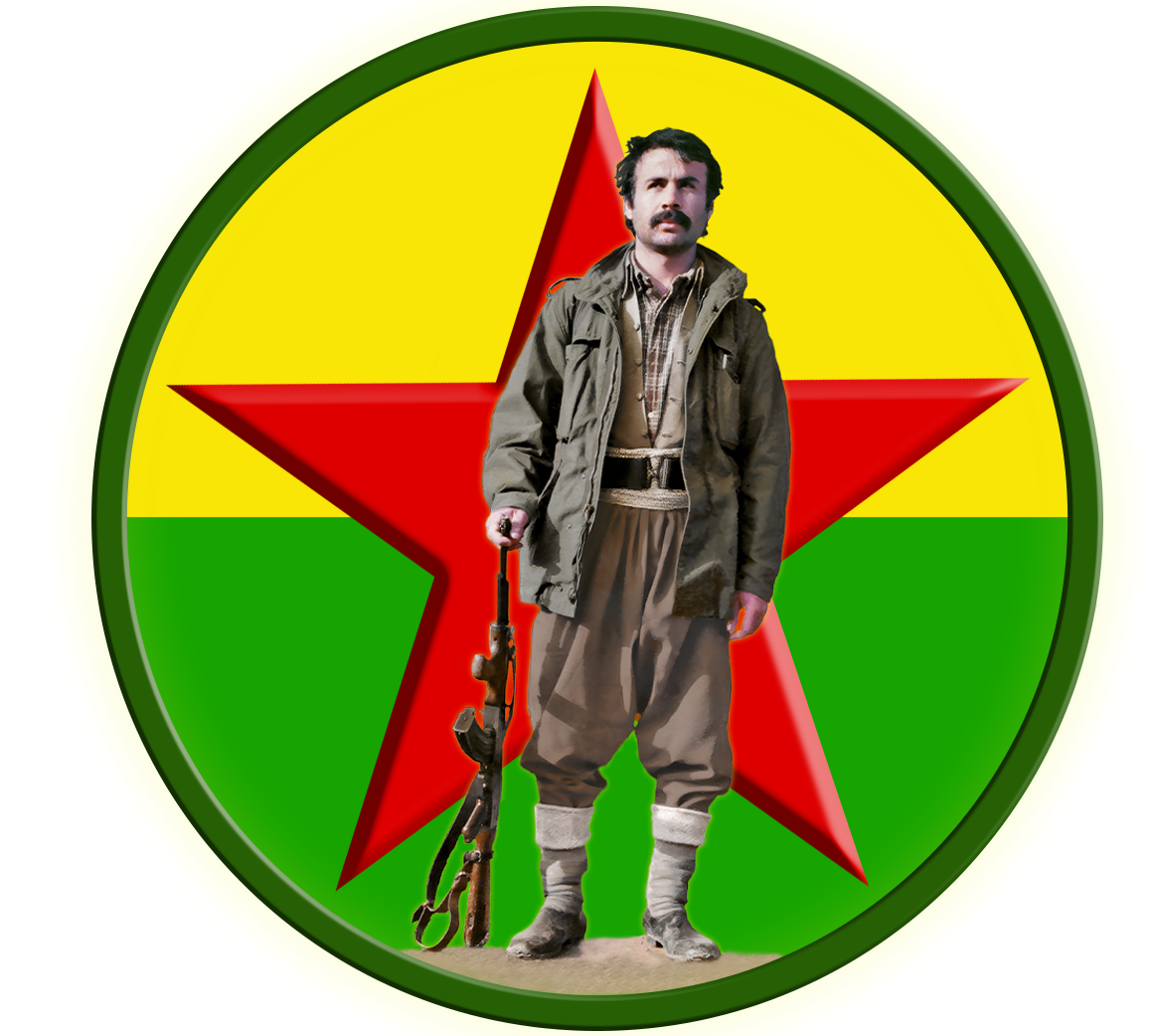
He was from Hilvan district in Urfa. He had chosen the name Botan for himself. Sometimes, to comfort him, the comrades would say, “Those who name themselves Botan stay in Botan. You could not have gone from Botan to Amed without proving yourself, but you have proved yourself.” We knew each other for twenty days. That clash was also our last moment together. Yet I had engraved those two words this fighter spoke sincerely in my memory, without knowing what would happen in the future. Or you know how, sometimes, when someone is lost, you remember their manner and movements, words and behaviour, their path and route at the last place where you parted. Ours was somewhat like that. That is, after the moment of loss, you bring what you have lost back into our memory in all its naked clarity. Perhaps this is because you do not believe that what you have lost is lost. You want to bring it back to life so that you can believe it. If you see nothing at hand that can help you find them, you immerse yourself in their traces, voice and words; and once you are entirely sure they are gone and can no longer be found, you comfort yourself with a memory of them or a word. When that person is a martyr, the most precious thing is to regard keeping them alive through writings or memories as a debt you owe.
At that moment we parted again and went to comrade Ferhat. Comrade Ferhat, a brave fighter who inspired fear in the enemy and great courage in his comrades, stood before us with a black-and-white military scarf tied around his forehead. He had asked me and comrade Berxwedan to go down Kato's slopes and, if there was an opportunity, strike any of the withdrawing soldiers at close range. We went down. The other comrades had occupied many areas too. It was me and comrade Berxwedan. We had camouflaged ourselves among the stones and rocks with mende vegetation that rose to our torsos. Crawling a little, we had gone to a strategic place where we could see the soldiers better. There was already a column. We had followed them too. That column was very close to Kato. Had we not been late, we would have achieved a very good result; but comrade Berxwedan had short legs and was slow getting through the corridors. When we reached the place we wanted, the column had vanished.
There were some flat areas within Kato. To cross them unseen, we had camouflaged ourselves with a little more mende (mende). As we crawled after that unit, we did not know there were nearly twenty commandos in the flat hollow below us. Had we moved very quickly, we might even have entered among those soldiers. We were a little surprised too. Two guerrillas and twenty soldiers, but they knew nothing of us. We stood up and said, “Surrender!” They did not take much notice. They even took us for their comrades, because we had emerged from a place they had never expected. We had stood up to fire anyway. We still do not even know why we said, “Surrender!” Without giving those opposite us a chance to fire, we emptied all the ammunition we carried at them. Those who died died, and the rest scattered like soap foam falling into water. Not a trace remained of the bravery of the soldiers who had kicked buckets and beaten our mothers. We wanted to go and collect weapons. But the soldiers on the opposite slope gave us no chance. We had returned saddened that I could not retrieve the weapons. After some time, the Cobras and Sikorskys moved to the point where the action had begun.
Comrade Ferhat had said that the comrades had carried out an action against the enemy; some comrades had said there had been little gunfire and it might have been a search-and-sweep operation. Comrade Herem had seen that it was an action and that the soldiers were carrying bodies, had said so, and had come toward us. We had very little ammunition left, too. We were trapped beneath a rock. If Comrade Herem and the others had not hit the soldiers above us, things would have become harder for us. The enemy withdrew once more, and very intense fighting began. In Kato’s corridors, fighting had begun that was like playing hide-and-seek with the soldiers. The enemy could not manage to get in among us. This time it had sent the ruthless village guards of Osyan and Segirki to the front. I could sense the words spoken under compulsion beneath the cowardly, anxious voice of the village guard who said, half in Kurdish and half in Turkish, “Terrorists, come and save yourselves.” The fighting lasted a full five hours. The enemy could not enter Kato. They left their dead in Kato and went away.
We did not know that Comrade Botan had fallen as a martyr. We also had two lightly wounded comrades and one seriously wounded. At night we all gathered. We gave our reports to Comrade Ferhat. We described the action we had carried out in detail. A total of thirteen soldiers had died, and one village guard. We had taken some risks, but Comrade Ferhat was very glad we had returned alive. In fact, we had broken the rules a little. We should not have gone so far outside the area. Comrade Ferhat and Comrade Herem had already told us to strike when we found an opportunity. There was no problem on that score. It was time to evacuate our wounded and our position. The people were pleased at the enemy’s flight back. The enemy really had suffered a blow. With defensive positions in Kato, it would have been impossible for the enemy to enter Kato anyway. Comrade Ferhat had established those defensive positions well. Comrade Ronahi’s wounds were very serious. We had brought him out of Kato with great difficulty. Physically he was rather heavy, too. I remember very well that Comrade Ferhat had lifted Comrade Ronahi and taken him onto his back. Despite our insistence, he had handed him back to us. We had all secured ourselves and left Kato without losses. There was confusion in only one respect. It was said that, after the fighting, a group had gone to the Beytüşşebap team without consulting Comrade Ferhat. We did not know how many they were or who they were. We thought Comrade Botan had gone with them. Comrade Botan did not know Kato’s terrain very well. He knew only a few natural shelter sites.
During the fighting he becomes separated from the comrades and fights the enemy. Because of the confusion, he had not come to us by evening. The place where he stayed was some distance away. He wants to secure himself there and spends the night there. We thought he had gone with the other comrades. In the morning the enemy made early landings in the combat area to retrieve its bodies. Comrade Botan, too, comes in the morning to look for us at the position. He does not leave the combat area. With the enemy landings, we heard gunfire. After fighting there for some time, he falls as a martyr under Cobra strikes. A rocket had hit his torso. A few days later, when the comrades went to the position, they had seen his body. This was how Comrade Botan’s martyrdom came about.
We had met over a period of twenty days and shared memories. All that remained to me of him was this: while I was going to obtain information about the operation from Comrade Ferhat and encountered him, we had both seen the enemy’s oppression of the people and been deeply affected by that scene. I had said, “Who will write this war?” He had said, “Those who have the heart for it write.”
My dear comrade Botan, a period of five years had passed. With those three words you had said to me, I decided to write this memory of you. You fought bravely and lived with honour. After your martyrdom, the enemy tried many times to enter Kato, but they failed in the later attempts just as in the first. Brave fighters like you wrote epics in Botan with their hearts. In your person, I bow respectfully before the memories of all Kato’s martyrs, and if this heart is enough, I will attempt to write about those who wrote epics like you, as far as my heart can carry me.
IN MEMORY OF THE 2007 KATO BATTLE AND MARTYR BOTAN
(Ferdi Dehşet)
(Botan Hilvan)
Revolutionary Greetings and Respects
29-03-2012