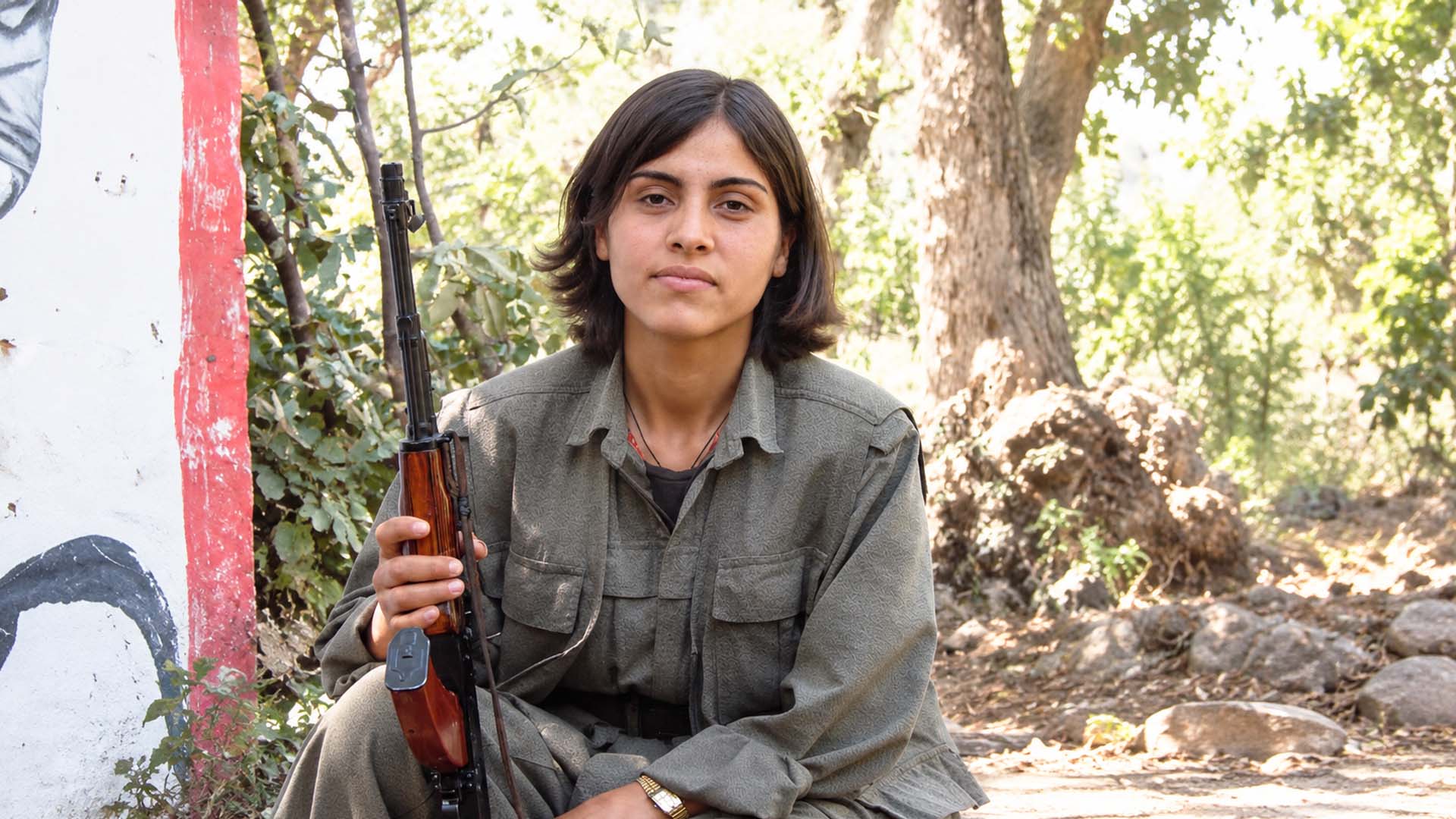
What is a lifetime? For the narrator, an interpretation as simple as beginning or ending! But what value can this account have for the person who lived it?
How can one put into words the experiences that gave meaning to spring, summer, winter, and the sorrow of autumn? A breath drawn, a drink of cold water, the soothing feeling of a solitary moment that immerses one in dreams… And how can one tell of their pain? The searing helplessness of what they could not do, the defeated air of failures, the numbness of unexpected shocks. Can one describe the moment they see that the work they sought to create through efforts as dense as a colony of ants cannot withstand the sea's rebellious waves, like lilies made of sand? Can the narrator feel the unique excitement, the ardor, all the emotions she experienced while striving to reach her goals and dreams?..
Or can the unending life of a martyr be summed up by the three-word sentence “began and ended,” caught on the pen of an inept writer and seeping onto white pages?
Comrade Arjin, today I too have joined this caravan of narrators like a novice writer. I do not know whether, despite all my inexperience, scrawling a few pages in your name will do justice to our comradely devotion. Yet I regard it as a debt to make your loss—which kindles our helpless hearts with pain and spurs them with the feeling of revenge—“the most vibrant force of life,” and to set it down somewhere.
Bitlis Castle is known to be steep. Alexander the Great had one of his commanders build it, and it is so secure and precipitous that even his army could not have conquered it. The soil of Bitlis is the sole witness to an ancient legend whose acts of heroism and epic loves have been forgotten. With its springs smiling at the mountains, the scent of basil and narcissus spreads across its plains. The often-heard sounds of frogs beneath the bridge are the melody of a song of loneliness; those crowding the city's streets are bewildered, compassless communities searching for their lost identities in every empty minaret. Despite the germs of disease meant to be planted in minds, it is virgin soil, cleansed of the filth carried away by the stream that secretly divides the city. Even Idris-i Bitlisi could not break the hopes of honor and freedom that continued to flourish in the city of Bitlis.
These lands, then, are the sacred realm that witnessed the birth of our rebellious daughter. But she did not remain long in the sacred land where history had taken root. Though she rebelled against fate, she was an exile traveling a road without choices; in her new place, alien to her history and culture, she could not find a single fragment that belonged to her. In the lands of Antalya, where Greek mythology is recounted with exaggeration to the beachgoers of modern times… As soon as the essential search for a sense of belonging began, she met the identity that was meant to be lost. The impact of the atmosphere of the 1990s serhildans, which stirred a storm in the metropolises, brought her together with the freedom struggle. She began singing her first childhood songs with her Kurdish friends in the folklore group she joined, wearing motifs distilled from her culture and the clothes of the guerrillas, the epic heroes of the mountains. The songs carried the impact that denial, annihilation, and the hot war had created in Kurdistan, but they also nurtured certain hopes within them. She was a sapling growing her childhood dreams upon those hopes. Inspired by the culture she had received from childhood, she also took the lead in the young people's halays. What was now being lived was a complete encounter with her belonging. Then came her activism in unauthorized demonstrations held in Antalya's Kurdistani neighborhoods and the need to lead the masses of youth.
The year 1999 ushered in a period too inflamed for the anger of youth to be restrained. Like every Kurdish youth, Comrade Arjin took part in this period at her most active. Step by step, she began to know better the path of struggle she was walking. When knowing it created the necessity of meeting its needs, she also entered political work. It was inevitable that her active participation would create the necessity of addressing new needs. Comrade Arjin had once promised that she would stop at no station as she advanced along the road she had begun. It was this promise that turned her direction toward Kurdistan within a few years. She could be considered somewhat fortunate as she began her first assignment away from home in the heart of Kurdistan.
Amed welcomed her with the heroic stories of the prison resistance and the elevating feelings of pride in the capital, while she began the youth work she would carry out without hesitation. Her warmth, strong drive to work, and friendliness integrated her with the organization in the area.
Although we remained in regions far apart, the youth work we carried out gave us occasion to meet. The clearest image of Comrade Arjin, one that has never faded from my memory, was her broad smile at our first encounter. And then there was the way she fixed her diamond-bright eyes on me and said hello. It was as though she possessed a charm that drew attention to her and made her presence known early. In a broadly attended youth discussion, I had found myself facing a fleeting glance in which her plain yet curiosity-filled expression brought those around her under its spell, as well as her endless ardor, her excitement, and the curiosity reflected on her face. Such encounters were repeated many times afterward. Much changed as time passed. Her childlike smile settled upon her rosy cheeks. She also had that excitement; like the cornerstone of a personality too lively to remain still even for a moment, it never left her. Just as it was impossible to sit somewhere with her and exchange a few words, when she entered into an activity or went somewhere, it was equally impossible not to be swept up in her wind. What remained for us was to be carried by a wind whose place of rest we did not know.
In the work we were engaged in, individual development was like the wind: stormy in some, a gentle breeze in others. In the meetings where we evaluated our work and in the central periods of concentration that would guide practice, we could see, moment by moment, the level Comrade Arjin's development had reached. Perhaps the wind that swept her along was her search for development. The last time we came together in the same frame was during the group outing we made in Eğil, Amed. In my memory, the most lasting image to seep into the pages of my book of memories was the rebellious girl's smile gleaming on glossy paper.
She had begun this road like waters that flow onward toward their bed. She too was an adventurer in an adventure that had come to belong to a people, indeed to the world. Each excitement made her take a step; each step let her experience a thousand new excitements. Now it was time to take a broader step. With awareness of this and in eager haste, she began moving toward the greatest adventurers. When we said goodbye in 2004, the reassuring feeling of our promise to meet again remained within us. In any case, the thought that sooner or later I would greet the lands through which my comrade had passed traveled with me like a destiny. Even in coming to the mountains, these coincidences clung to my body like a shadow. This time, however, I was always arriving one step behind at the places my comrade had passed through. Qandil, Xınere, Metina, Xakurke, Zap: the memories of Comrade Arjin rang in my ears as though she had just risen and left. She had gifted an enduring memory to every comrade she met. As, with the air of a collector, I stuffed every memory she left behind into my bag of lived experience, I lost myself in the urgency of adding new chapters to Comrade Arjin's story. Such are guerrilla conditions; sometimes one cannot find the opportunity to greet a comrade just one step ahead. Perhaps we too passed by one another many times in our placeless land without even our eyes meeting. As my heart struggled to fulfill our promise that we would meet once more, it reacted with pride mingled with sorrow to the haste that prevented our gazes from meeting and carried my comrade northward.
Comrade Arjin was now a traveler bound for Serhat, together with all the longing and love in her heart. I had not caught up with her, but the possibility of meeting in the north was the warmest and greatest hope left in my hands. After all, the day when we would complete all our preparations to join the northern caravan was drawing steadily nearer. The journey north that adorned our dreams was one Comrade Arjin achieved through great labor. Perhaps her first wish was to go to Amed, but she was not indifferent to the decision for Serhat that emerged. She began this adventure-filled journey at a run. She had only postponed her departure for Amed a little. To attain the secret of that boundless history in the Karacadağ mountains and to complete as a guerrilla what she had left unfinished in Amed was the greatest goal she had set herself. Ben û Sen Bastion and Keçi Bastion, the most vivid witnesses of history, all the walls encircling the city, and the narrow stone corners of the neighborhoods within those walls where she had made her rounds before: she continued to dream of roaming them freely from end to end, this time within the military order of a guerrilla army. She had first seen the reality of the enemy in all its nakedness in Amed. Her reaction mounted as she saw the attempts to leave the people and the movement without Leadership, denial and annihilation, policies of hunger, and the schemes to bring down and corrupt the youth. It was, in fact, this reaction that drove her arrival in the mountains and her early move into the environment of the hot war.
Being part of the first group of women to go to Serhat after many years enabled her to enter practice bearing the weight of her serious mission. She had set herself many goals in this area, which had grown alien to women's guerrilla struggle. The first steps, though difficult, had now been taken. But my comrade, in love with firsts, also left us face to face with the reality of becoming Serhat's first woman martyr after many years. Now, as I look back at the faithless years that did not bring our eyes together, I renew my vow of revenge, my only consolation.
Code Name: ARJİN ÇEM
Full Name: ZEYNEP KATAR
Date and Place of Birth: 1984 / KAYALIBAĞ, BİTLİS
Mother's Name: AZİZE
Father's Name: MUSTAFA
Date of Martyrdom: Martyred on May 28, 2008, in a clash around the village of Gülizerk,
in the Serhat Tendürek region
Tamara Varjin