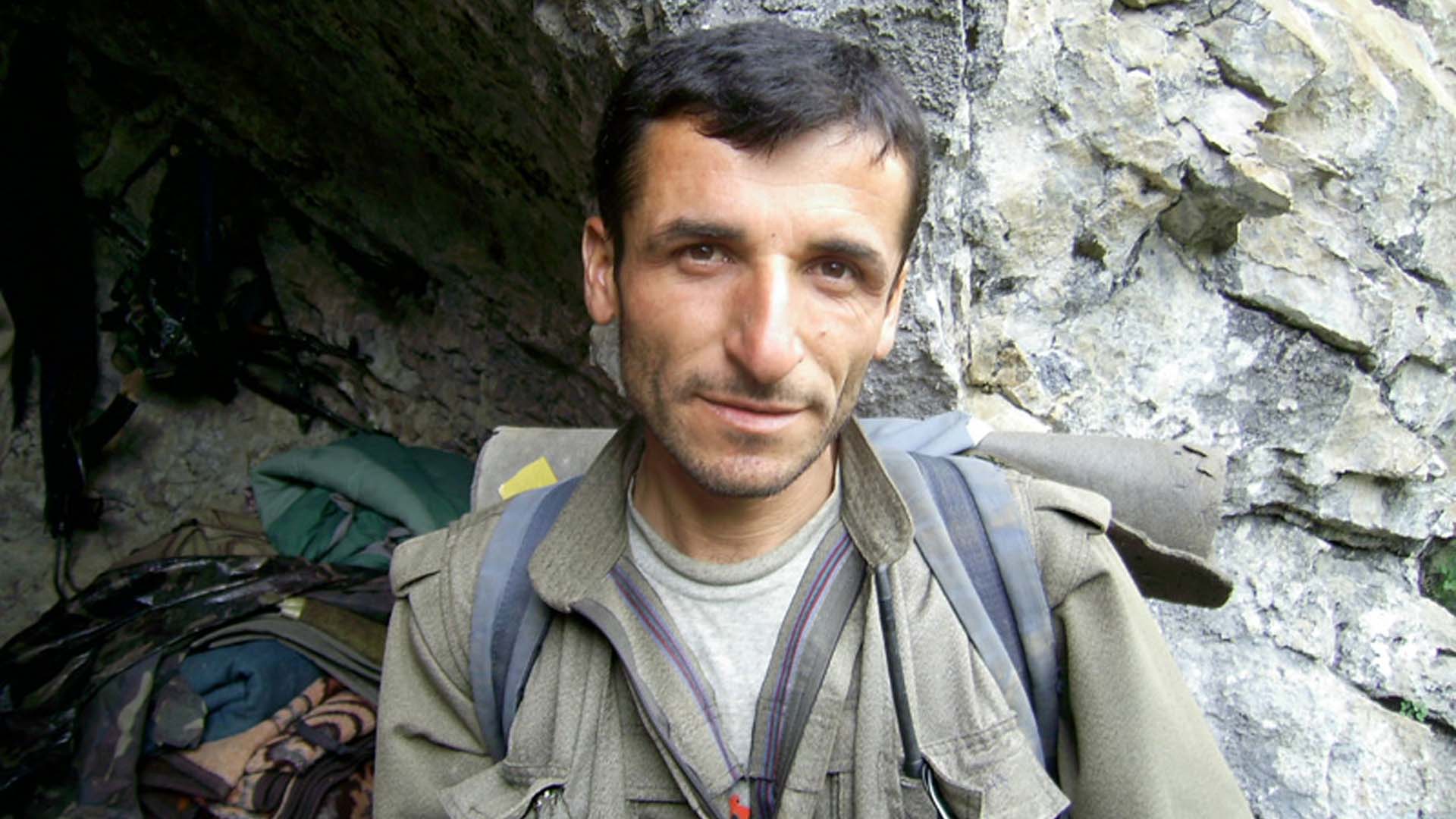
I must be in the most difficult place because difficulties are what made the PKK the PKK
In the course of history, whether for humanity or for a system, if the language of truth is not to be betrayed, it is important to approach events and phenomena with an understanding of the perspectives and virtues of those who shape them and of what they mean in a people's self-expression. If history is left to the mercy of the oppressors, we should know well that, in its own ruthlessness, it too will have the final word in some form, sooner or later.
Today we all know very well that history has always been written by the dominant powers. Beyond that, far from developing interpretations worthy of the facts, what happened has often been treated as though it never happened at all, with attempts merely to lull and suppress it through speculation at the time. Under present conditions, the opportunities for every person seeking knowledge, virtue and beauty to develop and educate themselves have expanded enormously. There is no longer just a single voice shouting only what people are meant to hear. Even if some of us have not yet fully developed our historical consciousness, the accumulated suffering of thousands of years has lodged itself in our genes without our knowing it, always holding a latent potential.
Despite this profoundly alienated reality of ours, do we not keep asking ourselves, ‘Who am I? Why am I searching for myself? How can I exist?’ As peoples who have lost their question marks, we now find more answers, yet our questions increase and deepen day by day. Of course, reaching the whole from the individual, as well as the individual from the whole, is an important principle of historical science. For societies and movements alike, we must therefore know well the mechanisms or people involved in every step towards the future. If, as is said, history is ‘the sum of the accumulated products of human labour’, why is this very phenomenon still the one most in need of being defined correctly? In my view, it is because we do not consider ourselves responsible. It therefore becomes everyone's duty, in our own simplicity, to bring those who have left a mark on our lives into our consciousness and proclaim their song.
As a movement that has virtually created itself out of nothing, we must be able to portray those who have shown the greatest selflessness through their own inner dynamics alone, without much need for commentary. We all know that the most fundamental traits of people who become part of history are, alongside the consciousness they have attained, their ability to put their determination into practice amid the confusion of the moment, despite all possibilities within the relativity of time. The meaning of this cannot be underestimated, especially when the purpose is to embed this reality in the memory of a people whose every dynamic has hardened into concrete, and to make the seed of hope sprout. Another reflection of lived reality is that no hero has ever been fully understood in the circumstances in which they lived.
Indeed, it is this very reality that makes them different. A person's wholehearted motivation for the truths and values they believe in is one of humanity's greatest virtues. This is what the reality of the martyr means. They alone have brought the torch of freedom to the present, complementing one another like links in a chain and passing it from hand to hand as in a relay race. They resemble one another. Their shared qualities are a readiness to risk their lives when necessary for an honourable life, and to confront life resolutely on that basis. Comrade Bahoz is one of these examples. He is from Hakkari. He grows up there and comes to know the party there. The sound of freedom actions illuminating the pitch darkness spreads from nearby Berçela every day and penetrates the city. He knows that the guerrillas are as close to him as his carotid artery. They were in Berçele, Bervesevine or the Kato mountains. The dawn rays striking the mountain peaks seem to act as a link between them. Life seems to be preparing young people like him for the mountains, making him feel it every day. It is a true feeling. Otherwise, what were those freedom fighters doing on the mountaintops, thundering and radiating light? The mountains were ours, and our flag should fly on their peaks. Believing in this simple sentence as an article of faith, comrade Bahoz turns his eyes towards the Berçela mountains and sets his sights on nothing else. He consciously struggles against the system. By applying in Hakkari the assimilation policy it once applied in Dersim, the system seeks to sever young people from Kurdish identity and freedom through school. Knowing that it aims to Turkify this city, which has preserved its Kurdish essence, as though pouring the whole of Turkey into a small city, comrade Bahoz escapes this and crosses to the opposing side. They believe they will succeed through student youth, whom they try to detach from the freedom struggle by offering many opportunities, and considerable effort goes into this; but the plan fails in the face of young people like comrade Bahoz. Using school to his advantage in preparing for conscious participation, he follows the party and reads every publication it issues. Finally, in 2001, he makes his decision and joins the guerrilla ranks. After basic training in the Xınerê area, he spends a period working on TÇM activities, then returns to the guerrillas. He takes part in the preparations for 1 June and immediately volunteers for the north; he is assigned to the Dersim area. Comrade Bahoz is a very sensitive comrade. Looking at matters such as terrain, the enemy and the people's situation with a researcher's eye, as soon as he reaches Dersim he prepares a report with detailed information about the area and the journey and sends it to the main headquarters. He then consistently gives importance to military work to make the guerrillas' presence felt in the vacated areas. Comrades who stayed with him in this area describe him briefly as follows:
In Dersim he always wanted to take his place on the battlefront. After three years there, he moved to the Black Sea region. He always said, ‘I want to take my place in difficult places.’ He went to the Black Sea region twice. On the second occasion, he was seriously wounded. He participated in life with great enthusiasm and eagerness. He always said, ‘I am not performing well in practice.’ His participation drew his comrades' attention. Sometimes he was quiet; at other times, he was the one making jokes we would never have expected. His approach inspired confidence in his comrades. Everyone wanted to live with him. He was seriously wounded for a second time. One arm remained disabled. His injury deeply affected his comrades. He had travelled on foot for fifteen days while wounded, showing great resistance. He was a comrade of strong will. Even in this condition, when his comrades entered combat he fought too, never hanging back. Not once did he say, ‘It hurts here, it hurts there.’ When his comrades wanted to send him south, he instead proposed going further west. His wound healed quickly, but one arm remained disabled. Although he should have been sent south because ‘he would have difficulty’, he refused and took part in the work in this condition. He insisted on going to reconnoitre enemy forces that had set out on an operation, and went. Because the reconnaissance site was a cliff, his foot slipped and he tumbled down it. This was how comrade Bahoz fell as a martyr. Falling from rocks has become a subject of Kurdish folktales. It is believed that one will sprout in the form of a rose. Comrade Bahoz, too, will surely sprout one day like a rose hidden in the hearts of all the guerrillas. All the guerrillas believe this.
The rose is beauty; the rose is love and care. A rose does not grow where there is no love, attention or care. It exists when the love in a human heart meets earth, water and air; if one is missing, it cannot exist. The rose is the masterpiece lovingly created in the hands of the goddess of nature. Aware of this, it stands proudly and withers without bowing its neck. Since a time whose beginning we do not know, people have chosen it to express the love and longing in their hearts and to create smiles. The rose belongs most of all with peace. Can roses grow where there is no peace, in lands ruled by war?
For how many thousands of years have the Middle East and Kurdistan longed for times when roses sprout and people smile? With his belief in and longing for peace, the wise person with a heart of roses gave us a day called the ‘Festival of Roses’. He wanted to plant roses in our lands, where smiles had frozen on people's faces. With persistence and patience, he fought tirelessly for thirty-five years against every harmful plant and obstacle, to clear the soil of weeds, aerate it and prepare it for planting. Those who feed on war and blood wanted to cover the earth in concrete so that roses would not grow. ‘He’ fought as a one-person army against the tricks and deceit that the culture of domination had accumulated and perfected over millennia. In this encounter, Ehriman and Ahura Mazda once again entered into conflict. Was not the struggle between light and darkness within a single heart? ‘He’ had banished Ehriman from his heart forever. Day and night, tirelessly, he gathered the beams of light in the hearts of those he fought, however faint and elusive they might be. For roses to grow in the soil, he first had to plant them in the hearts of those he fought; but the filth and waste of thousands of years had accumulated in their hearts. Each time, darkness prevailed and prevented the wise person from cracking and breaking through that filth.
Those who do not know how to live with roses or grow them, those in whose hearts roses do not bloom, again entered the lands where we planted roses with their bombs and weapons. We laid in the earth our beloved comrades, beautiful beyond compare, who had grown rose gardens in their hearts. We fought fiercely, never losing our faith in the times when we would be able to plant roses in these lands. We will fight. Knowing that every war will evolve into peace, we will come with roses on the day we fulfil our promise to the ‘Wise Person’ to secure an honourable peace bringing freedom to the peoples. We will welcome the rose-faced ‘Wise Person’ with roses and with millions. We will plant roses in the lands of our rose-faced comrades, wrap mothers' hearts in roses and kiss children's smiles. Then all the roses on earth will raise their heads and, with a breeze as gentle as a spring zephyr, celebrate our people's festival. Our comrade Bahoz will be one of these roses. We bow respectfully before his martyrdom and renew in his presence our promise not to retreat even a millimetre from making roses grow, even at the cost of our blood.