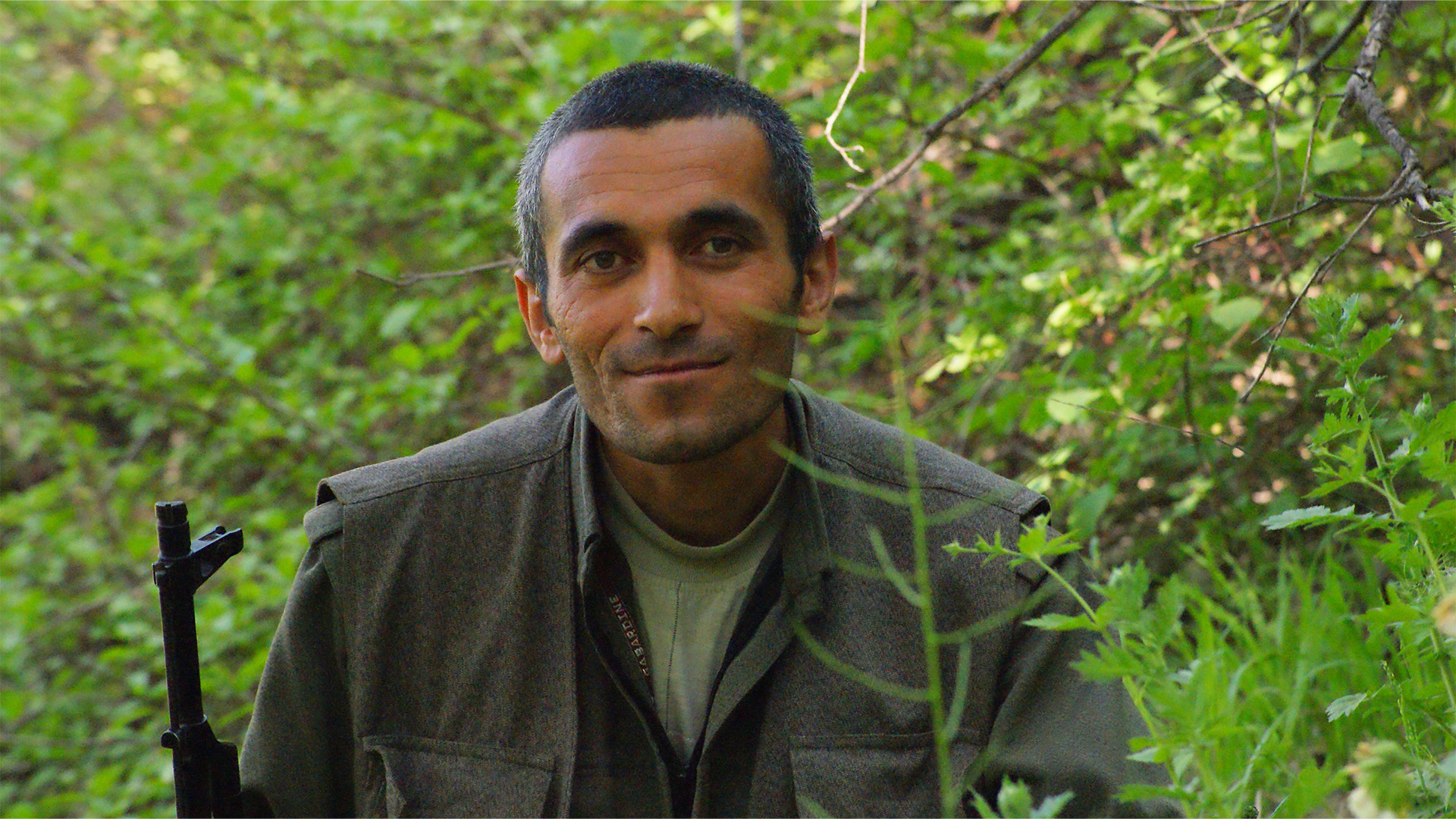
Setkar is a village at the foot of Kato. It is one of the most patriotic villages of Beytüşşebap. With dozens of martyrs, Setkar is also one of our villages known for its tradition of resistance.
Kato is known as a proud and dignified mountain, and so it is. Growing up here truly gives a person a sense of dignity. And if you go far back in history and read the Greeks’ famous ‘Retreat of the Ten Thousand’, that is, the book ‘Anabasis’, you will see for yourself, at least a little, what the Kato mountains mean. According to one account, Kato supposedly means ‘curse’ or ‘accursed’ in Greek, and the Kato mountains mean ‘accursed mountains’. In truth, that description still holds today. These places are accursed for every colonizer. For these mountains really are accursed for those who do not belong here but come to shed blood and seek to exploit our people. These mountains do not let everyone pass. As Ahmet Arif says, ‘These mountains, God willing, will not put a person to shame, and they protect a person.’
These mountains have always been a refuge for the Kurds. Perhaps the mountains are the force that watches over and protects the Kurds most of all. Thus, what is accursed for some becomes sacred for us. That is why the Kato mountains are sacred to us. They are places that protect us; they are fortresses.
Our comrade Çekdar was born in Setkar, the village at the foot of these Kato mountains, and looked up at the sky in their shadow, with their majesty around him.
Yes, comrade Çekdar grew up with something of the spirit of these places. Many people from Setkar who suffered the enemy’s oppression were forced to leave their village and settle in Adana. Dozens of people from Setkar still live in Adana today. But comrade Çekdar’s family was among those who did not migrate. That made him belong here all the more.
A comrade who lived with him sinks deep into recollection when speaking of comrade Çekdar. Those words convey something of who he was:
‘We met comrade Çekdar in 2004. We used to call him “Çekdar Beytüşşebap”. In 2004 he was on the road to the North; that is, he was going to cross into the North. Crossing into the North had been our dream for years. We would cross into the North and fight the enemy. We would liberate Kurdistan. Despite the internal problems we were experiencing as an organization at the time, the decision to fight had nevertheless been taken. The June 1 initiative had been declared. Our crossing into the North as a unit was also part of this initiative. We too would put the June 1 initiative into practice. “We would either free Leader APO or free him!” A decision had been made on the basis of such a slogan. On the strength of that decision, our crossing into the North was full of great enthusiasm.
Comrade Çekdar was working as a courier between Haftanin and Hakkari. We crossed into the North in this way, a group of comrades almost the size of a unit. After we crossed the border, comrade Çekdar met us to guide our unit through that area, because he knew the terrain well. We had made a very arduous march.
After we reached our destination, comrade Çekdar was ahead of us. After all our exhaustion, he told us, “We have now broken the enemy’s back. Now that we have reached here, the enemy can no longer stand in our way.”
At the time, we could not quite make sense of what he said. We would say, “He hasn’t walked with such a load on his back or become exhausted; that’s why he talks like that.” But later, as we began to know comrade Çekdar a little better, we understood more clearly what his words meant and in what sense he had said them. We gradually began to grasp their meaning. Truly, if one reflects on what he said, one can say, “Just as the enemy has been unable to obstruct the movement or put an end to it for these thirty years, from now on it can never put an end to it or do anything.” It can neither strike a blow nor stand in the way. That these words were spoken in this sense gives one much to think about. It strengthens one’s feelings still further. Our adversary, who wants to annihilate us, simply cannot succeed. The reason is that the guerrilla force in the mountains of Kurdistan knows these places, commands them and has made them its home. And it is also because there are comrades with conviction and will, like Çekdar.
We crossed with him into the Hakkari area then. Would we see the Hakkari we had imagined? What Hakkari would we see? What kind of terrain, what kind of region would we find? We were curious about its mountains, their ruggedness, their beauty and their rocks. After we first crossed into Kato, the comrades told us, “Tonight we may walk among the rocks. Our feet may be injured or even broken. But when you see this place in daylight, all that tiredness, hardship and strain, and even the fractures, are forgotten.” Because they had told us this, even though we reached at two in the morning the place we were meant to reach at one, we did not sleep, wishing to ourselves that daylight would come quickly so we could see our surroundings. Although we were short of sleep, our curiosity prevailed and we stayed awake. We explored our surroundings until dawn broke and the sun came up. We examined everything around us one by one: was the enemy present in the terrain or not? Were there any local people? We kept exploring our surroundings. All the comrades sat on the rock, absorbed in surveying the area with curious eyes and binoculars. Truly, all that tiredness and strain were forgotten. Even from the sunrise, one understood that we were in a different country. A country that had won its freedom! In our minds, we believed we were now in a free country. No one could take Kurdistan from us any longer. What we had constructed in our dreams, we were now living here as reality.
After staying here for a while, we crossed into the Besta area. Despite all the hardship and suffering they had endured, these people said that, in spite of everything, they were still with the freedom struggle and its guerrillas. The closeness of the people and the guerrillas made all the hardships we experienced bearable.
After we crossed into Besta, comrade Çekdar also came to the area where we were in the autumn. It was mainly during that period that we came to know each other. Our first meeting then was in Geliyê Hezil.
Geliyê Hezil is a deep valley, with steep slopes on both sides. One side is Kela Memê, the other is towards Deriya Ayvan, and its source comes from Şikerê Memê. One can comfortably live through all four seasons there: summer, winter, autumn and spring. You might say, “It is winter; it will be cold,” but it is not like that. In its mountains, you can easily shelter yourself and meet your needs. The Hezil valley always offers people such possibilities.
When comrade Çekdar and the other comrades came to join us as a unit towards the end of autumn, our plan was to spend that winter together. When they arrived, we were doing our work to establish a base: bringing in supplies, building shelters and fetching dry wood to burn in winter. Truly, when I saw his participation in the work after he arrived, I thought he had boundless energy. He never became tired. The comrades would tire, but somehow he never did. I can say that he would walk for three or four hours with a load on his back, reach the camp, put down his load, pick up a pickaxe and shovel, and begin working. We all wanted to finish establishing our base as soon as possible. Comrade Çekdar devoted all his energy to that purpose.
When we finished all our work and moved on to education, the defence text entitled “Defending a People” had just arrived. Comrade Çekdar read, discussed and listened to the defence text with great excitement and enthusiasm too. He believed that if we understood even a little of the defence text that winter, we would be successful against the enemy in spring. Despite all the enemy’s technology, we could thwart its moves and attacks and strike blows against it.
Comrade Çekdar created such an atmosphere among the comrades. As we entered the spring of 2005, he wanted to remain in the area. He belonged to the Hakkari force, but had submitted a request to stay in Besta. As a result of his insistence, his request was accepted and he was assigned to the Besta area.
On April 14 in the spring of 2005, the enemy launched an extensive operation. It had stationed close to forty thousand soldiers on the hills. We were discussing what we would do in response, trying to determine what precautions we could take and how we could move. Comrade Çekdar made many proposals then about how to act, suggesting, “The enemy could be blocked in such-and-such a place and struck in another.” At the time, we thought that his youth made him eager and energetic, and that he wanted to strike the enemy. But we also thought that if he proceeded like this without taking precautions, he could fall a martyr. For this reason, the command always kept him in the background during actions. Yet he did not accept this and insisted that he too should take part. Eventually the comrades had no choice but to send him on an action.
When he went, he really did strike the enemy in exactly the place he had told us about. I can say that after comrade Çekdar’s group struck the enemy there, the back of the operation was broken. The enemy, at whose hands seven of our comrades fell as martyrs in that operation, suffered a very powerful blow. It had come with such a large force to finish off the guerrillas, but encountering the comrades’ offensive spirit made it believe it would not attain its objectives and withdraw. About eighty soldiers died in that operation. The comrades had gone and struck precisely the site where the operation was being coordinated. Seventeen or eighteen soldiers died there alone. The enemy was forced to withdraw the following day. It was this action led by comrade Çekdar that brought that about. A group of soldiers even became separated from the operational forces and was struck by the comrades elsewhere. The soldiers had reached such a state that they went to shepherds and asked them to take them to the military post.
Of course, this action was a lesson for the state. However large the forces it brought and however much technology it used, its return from these places would always be in such defeat, and so it will remain. It is not easy for soldiers to enter Besta or leave it. This had been made clear to the enemy.
Comrade Çekdar’s role in these actions was decisive. His offensive spirit, his tactics in action and the plans that were made brought about a powerful blow against the enemy. He was also warm towards his comrades in everyday life. He would say of himself, “Since joining this organization, my sole aim has been to do something for this organization and my comrades and to walk in the Leadership’s line. If I must fall a martyr to achieve my aim, I will. But I will not hold back from realizing my aim.” Truly, he made living by these words his basis to the very end. He accepted serving his comrades, helping them and taking a leading role for them as his responsibility. Although he held no formal assignment, he treated tasks as his own responsibility and carried them out like a commander, participating in life with these feelings.
Comrade Çekdar fell a martyr in the spring of 2010. A campaign of actions was launched in 2010, and he fell a martyr in Beytüşşebap, where they had gone as part of it. The organization had declared unilateral ceasefires many times. A period of non-action had also been declared. But the enemy had not responded positively; on the contrary, it had continued its attacks insidiously. It always attacked the people and the guerrillas with a policy of annihilation and denial. The comrades could no longer bear this situation. They said, “Either freedom or an honourable death!” In truth, comrade Çekdar preferred freedom and living freely to an honourable death. Whether among the people or among the guerrillas, living freely was always his dream.
Comrade Çekdar and the other comrades went to Beytüşşebap and entered the town. But because they lost their bearings, the enemy spotted them. The enemy surrounded them, and the comrades engaged in fighting to get out. Comrade Çekdar and the comrade beside him were wounded there. They fought. There were four comrades in total. Those with him wanted to get comrade Çekdar out of there. He told them, “You go; don’t let anything happen to you. Don’t put yourselves in danger for me.” But the other comrades would not leave him among the enemy. They tried to get him out too. They fought for three or four hours. Comrade Çekdar repeated, “Go before daylight.” The other comrades would not accept this. Knowing they would not leave him, comrade Çekdar shot himself with his own weapon and joined the caravan of martyrs.
His martyrdom had a profound effect both on the local people and on the comrades there. Once again it became clear that every militant of this movement can give their life without hesitation for the freedom of their people and their Leadership. This is a principle among all guerrillas. The guerrilla spirit is founded, at its core, on resistance. It is founded on not falling into the enemy’s hands. And, of course, it is also founded on protecting and looking after one’s comrades.
Comrade Çekdar, with his self-sacrificing spirit, still lives in Botan and Beytüşşebap. Even during his funeral, he seemed to live on as though he were still among the people. This also affected his guerrilla comrades in the mountains. His comrades too knew that comrade Çekdar had not fallen a martyr, but still lived fresh in their hearts, and would live there forever.’